Årebladet Granskning Gruvor

Undersökningsyta

1 112 km²

större än Singapore

Wrong beneficial owner, late accounts

but the company is still allowed to prospect for metals in Jämtland

The Swedish subsidiary of Australia's Neu Horizon Uranium, Energy X92 AB, had an incorrectly registered beneficial owner for more than two years, filed its annual accounts 197 days late, was issued SEK 20,000 in late-filing fees, and was at the same time granted 22 exploration permits covering an area larger than Singapore.

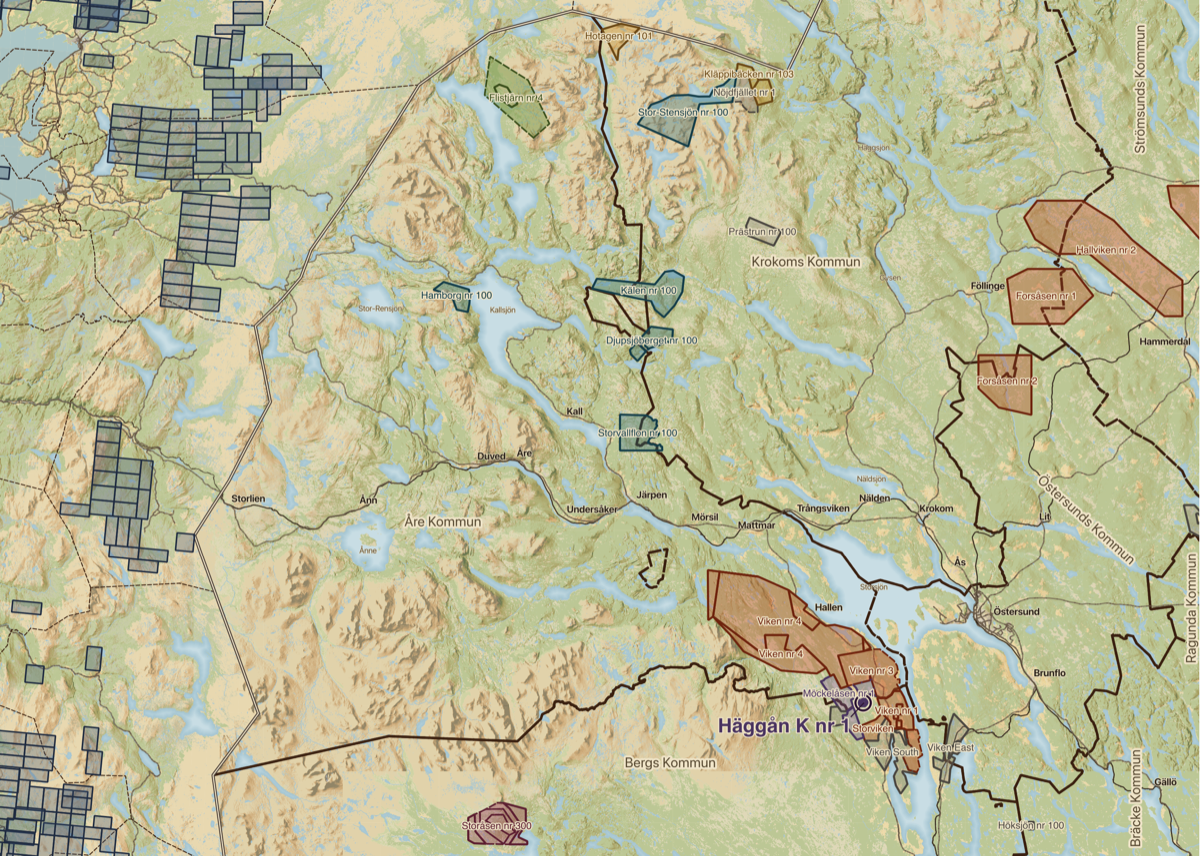
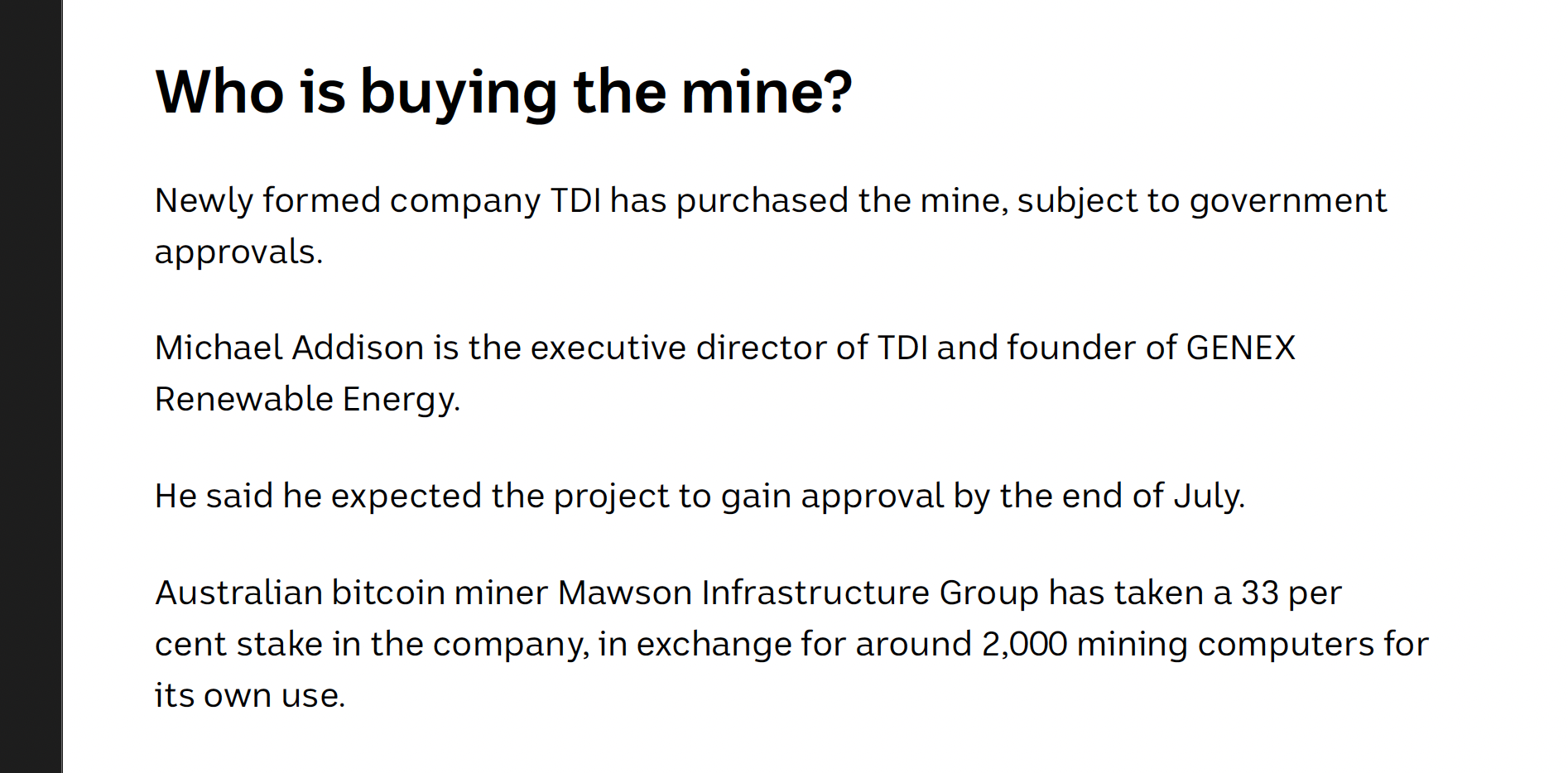
An Australian company1 founded to mine bitcoin in a disused mine2 today holds permits to prospect for metals and uranium across an area larger than Singapore in northern Sweden, including in and around Åre municipality3. An Årebladet investigation shows that its Swedish subsidiary has had an incorrectly registered beneficial owner for more than two years4, filed its annual accounts more than six months late and incurred a total of SEK 20,000 in late-filing fees5, none of which has prevented it from being granted further exploration permits6.

Kapitel 1

Bitcoin became uranium

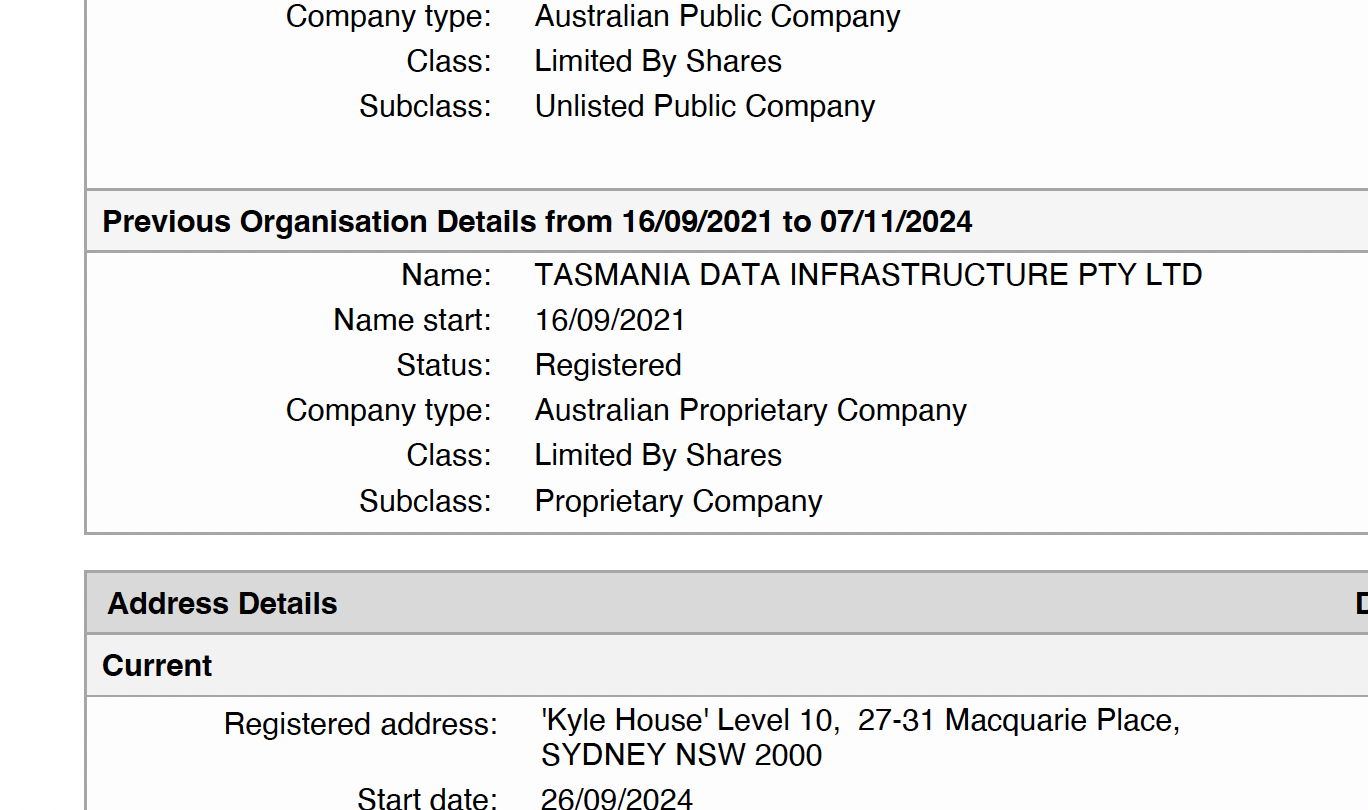
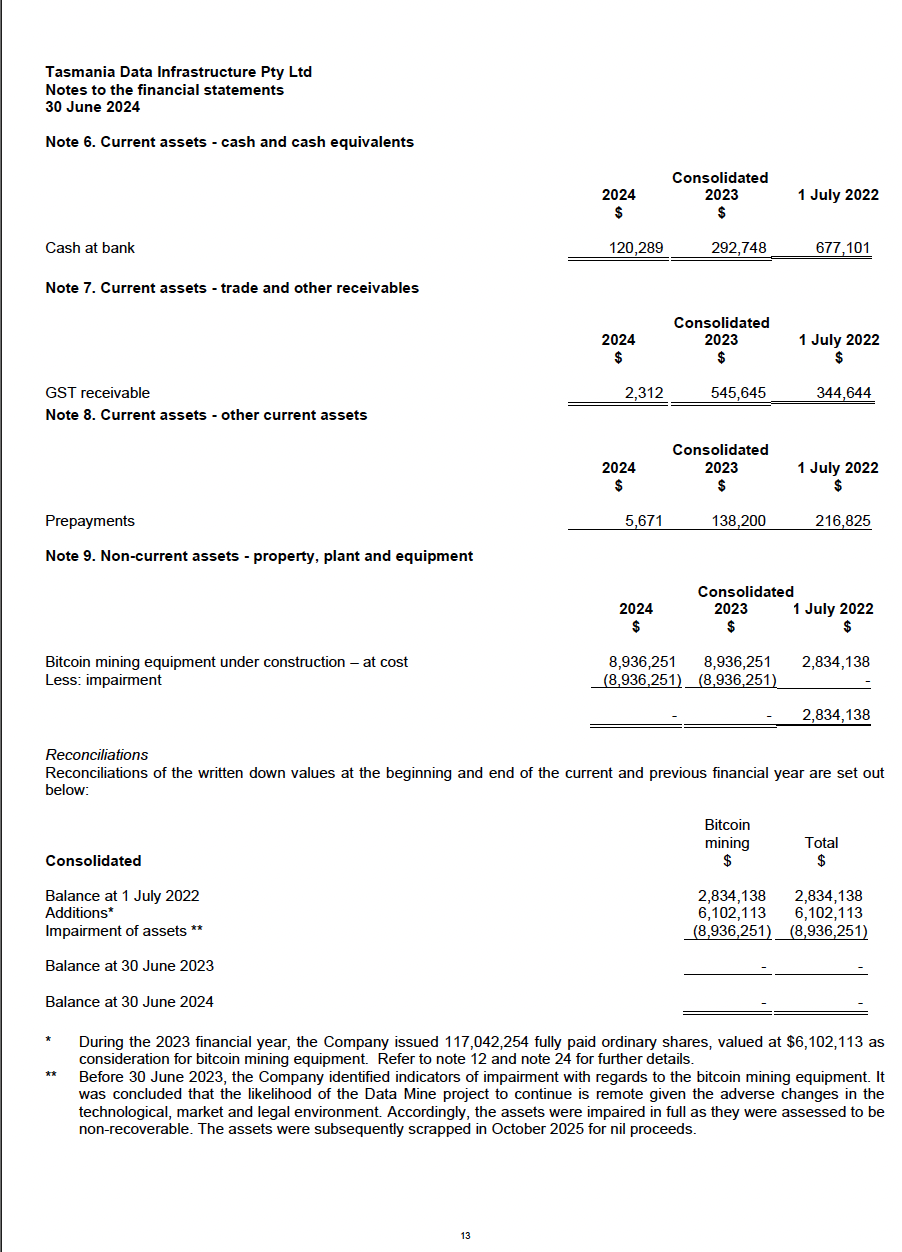
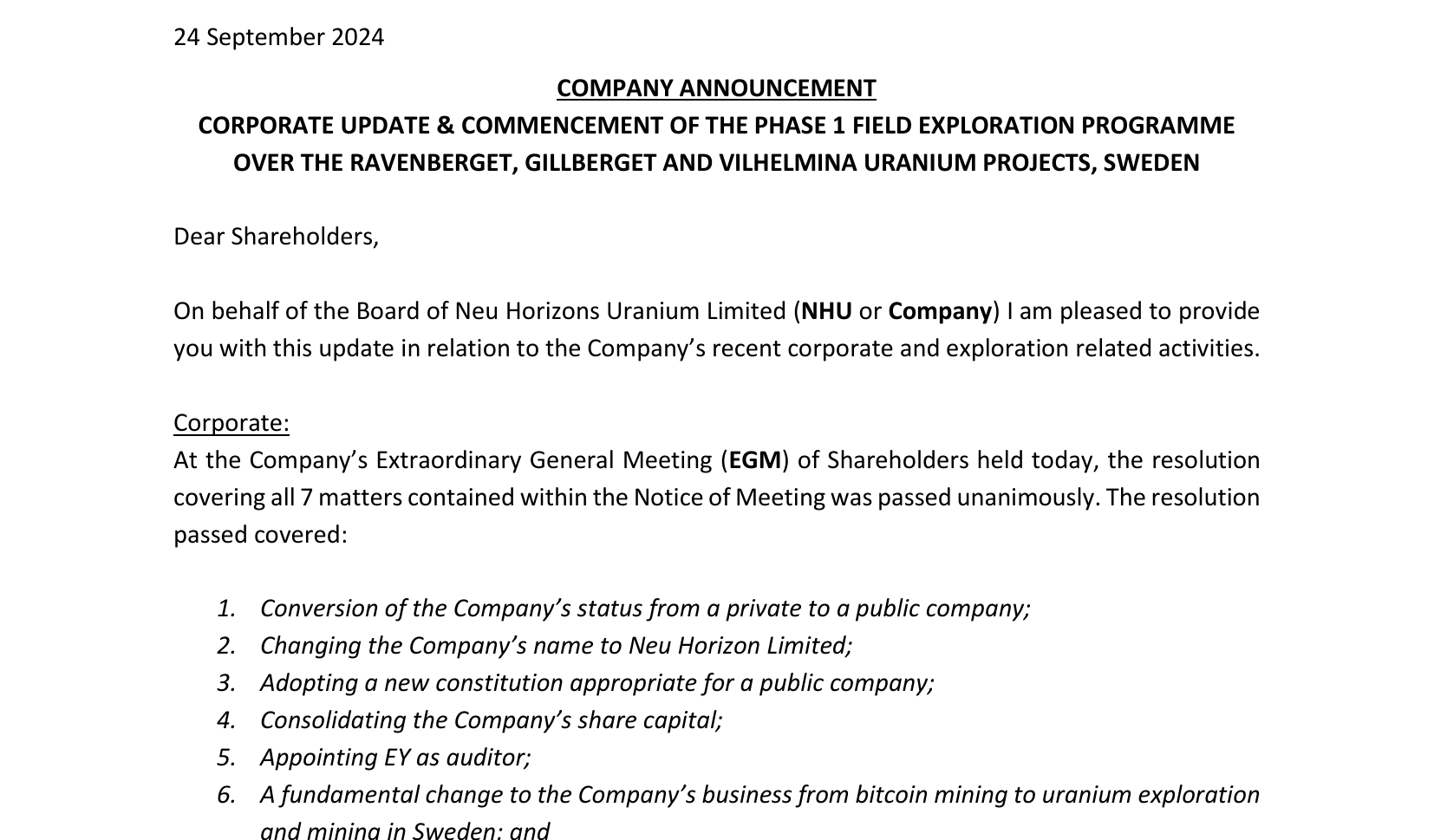
In September 2021, Tasmania Data Infrastructure was incorporated in Australia7. Its business idea was to mine bitcoin in a disused mine8. Equipment worth the equivalent of SEK 59 million was acquired but never put into operation9. In June 2023 it was written off in full10; in October 2025 it was scrapped for zero kronor11.

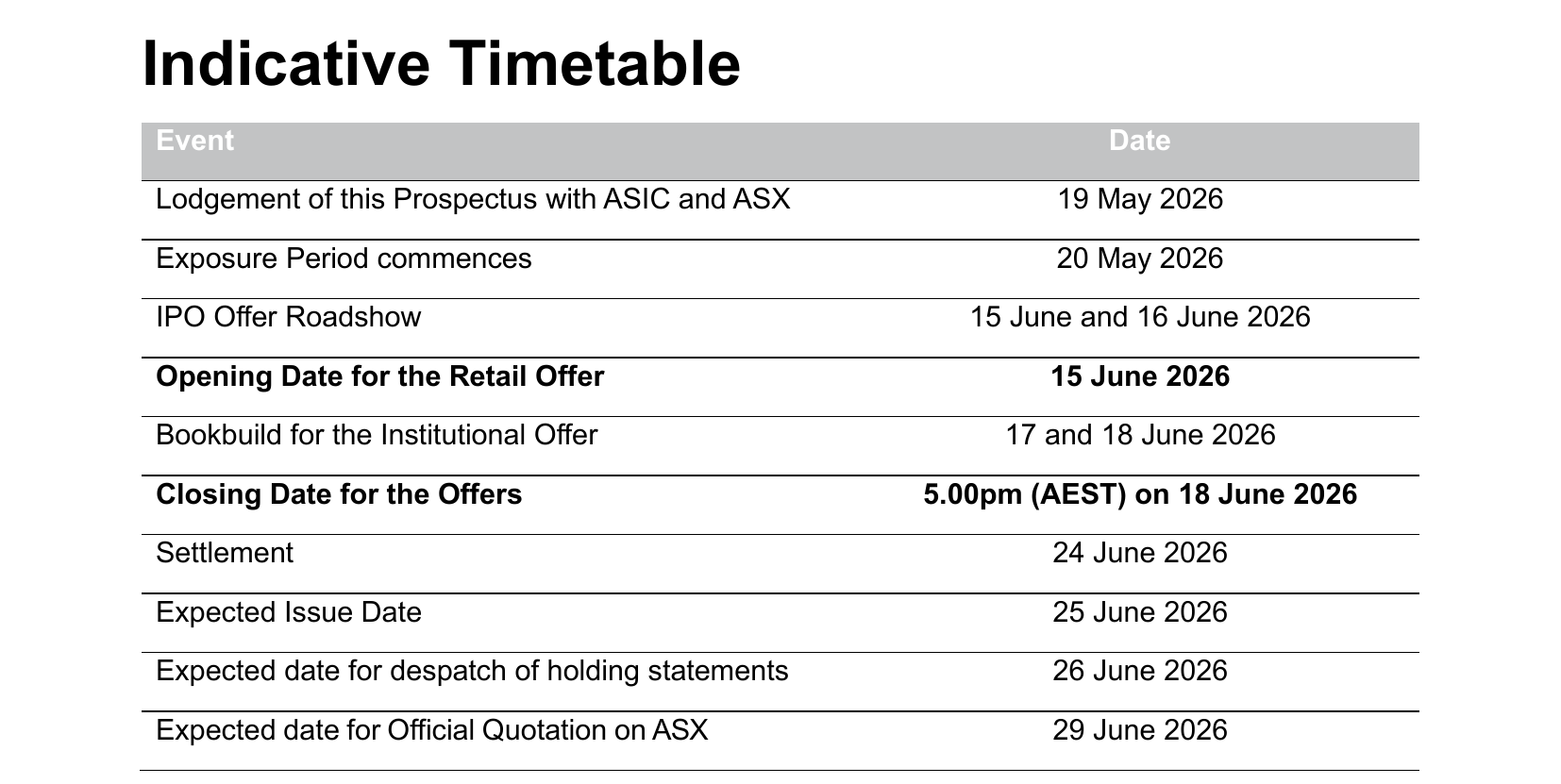
The parent company is now called Neu Horizon Uranium Limited12 and has instead turned to uranium exploration in Sweden13. On 19 May this year it filed its prospectus for a listing on the Australian stock exchange ASX, with first trading scheduled for 29 June14. But the road there has run through a Swedish subsidiary whose array of problems no public authority has been tasked with catching.

Kapitel 2

The shell company from Sundsvall

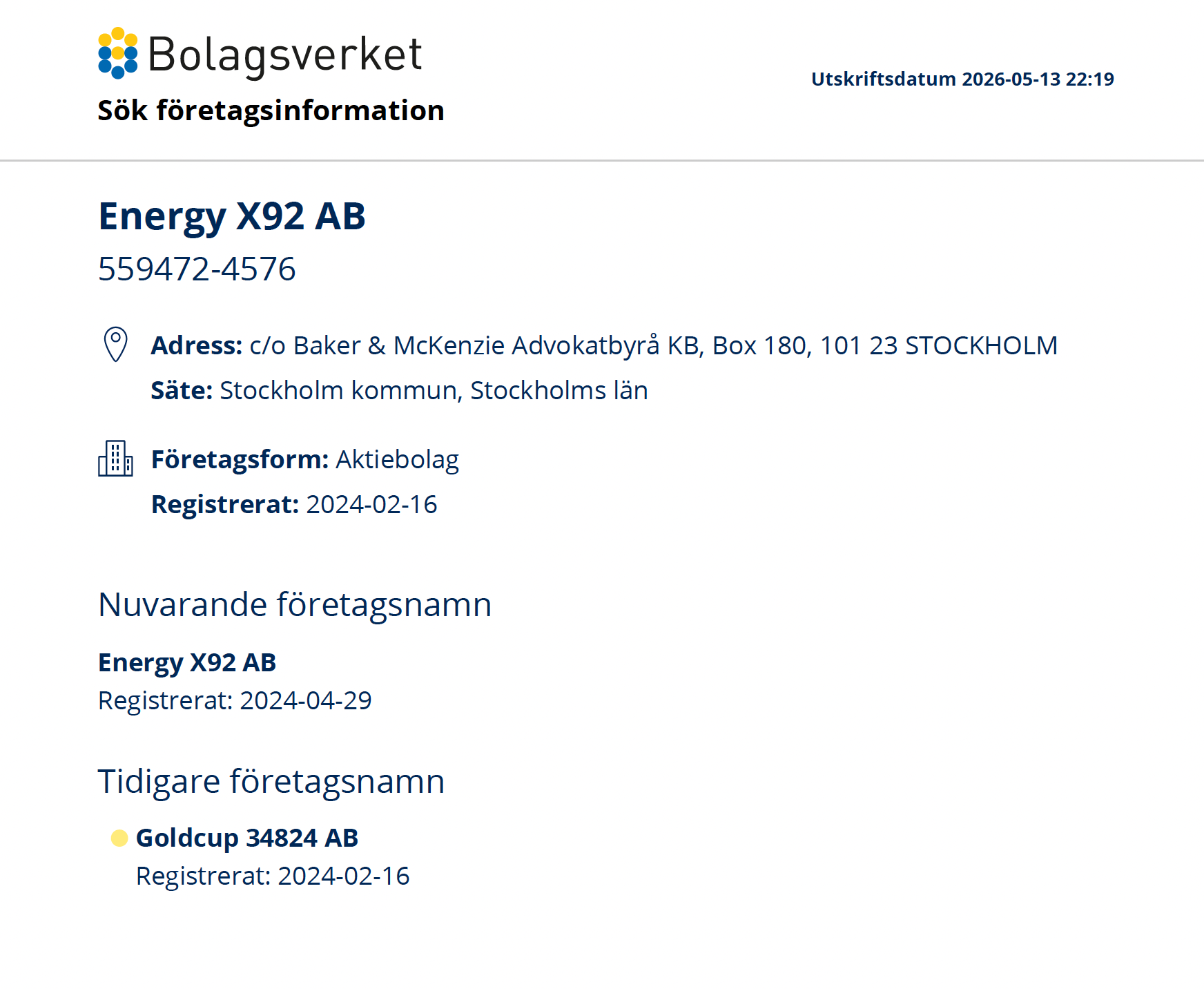
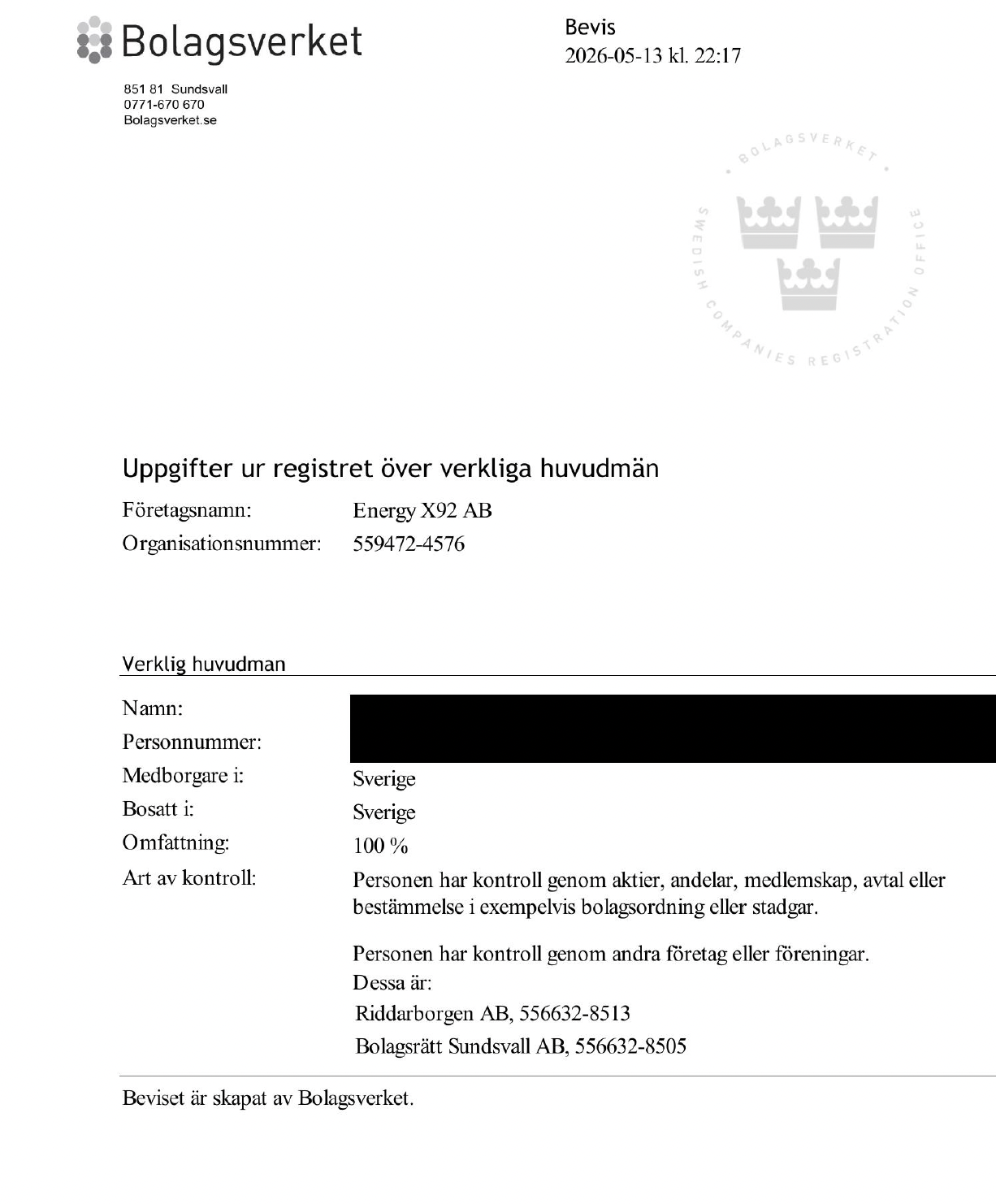
The story begins with a shelf company. In February 2024 the firm Bolagsrätt i Sundsvall (a shelf-company provider) created such a company, Goldcup 34824 AB15, a shell with no operations, ready to be sold on. At registration, Bolagsrätt Sundsvall’s CEO was listed as verklig huvudman (beneficial owner), via the group’s shelf-company structure (Riddarborgen AB + Bolagsrätt Sundsvall AB)16. This is an entirely standard procedure for anyone wanting to get a Swedish limited company up and running quickly.

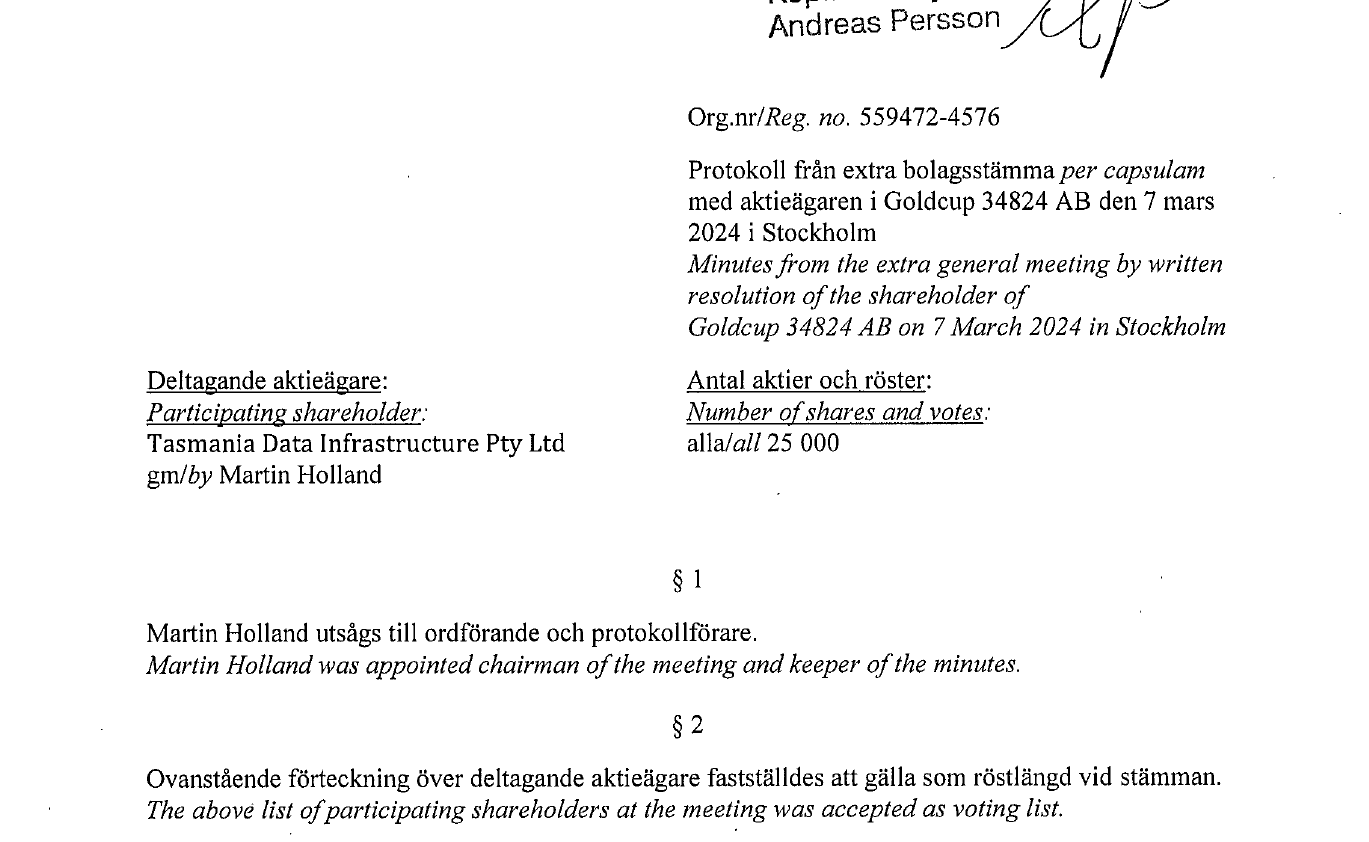
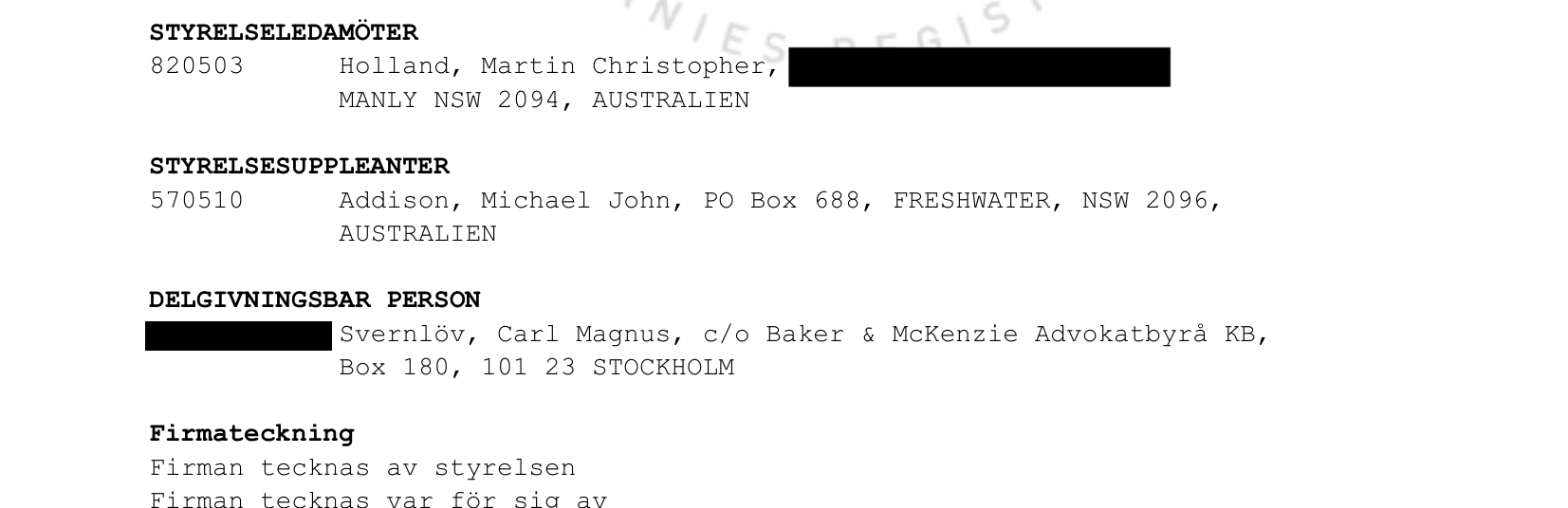
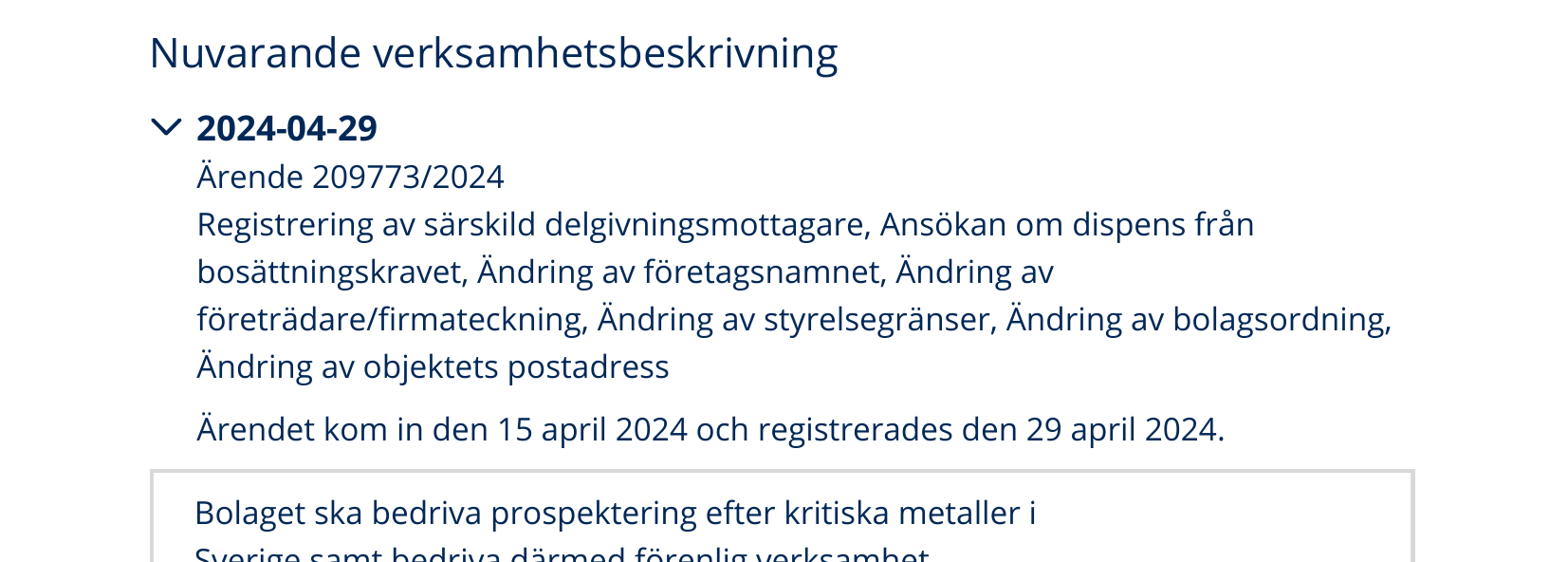
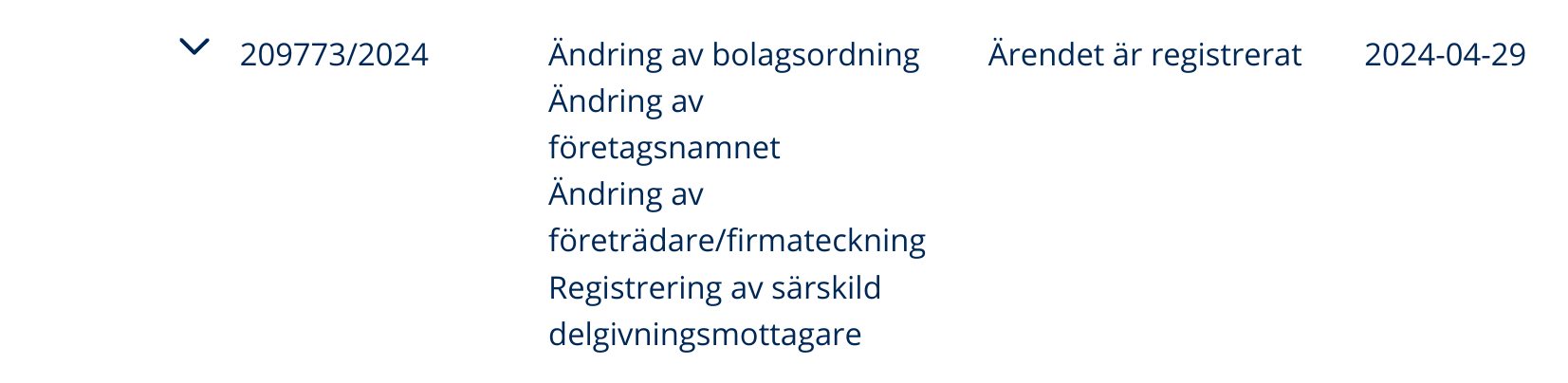
On 7 March 2024 the company was bought by Tasmania Data Infrastructure17, which appointed Martin Holland as board member and Michael Addison as deputy18. The company changed its name to Energy X92 AB19 and, according to its registration, was to engage in exploration for critical metals in Sweden20.

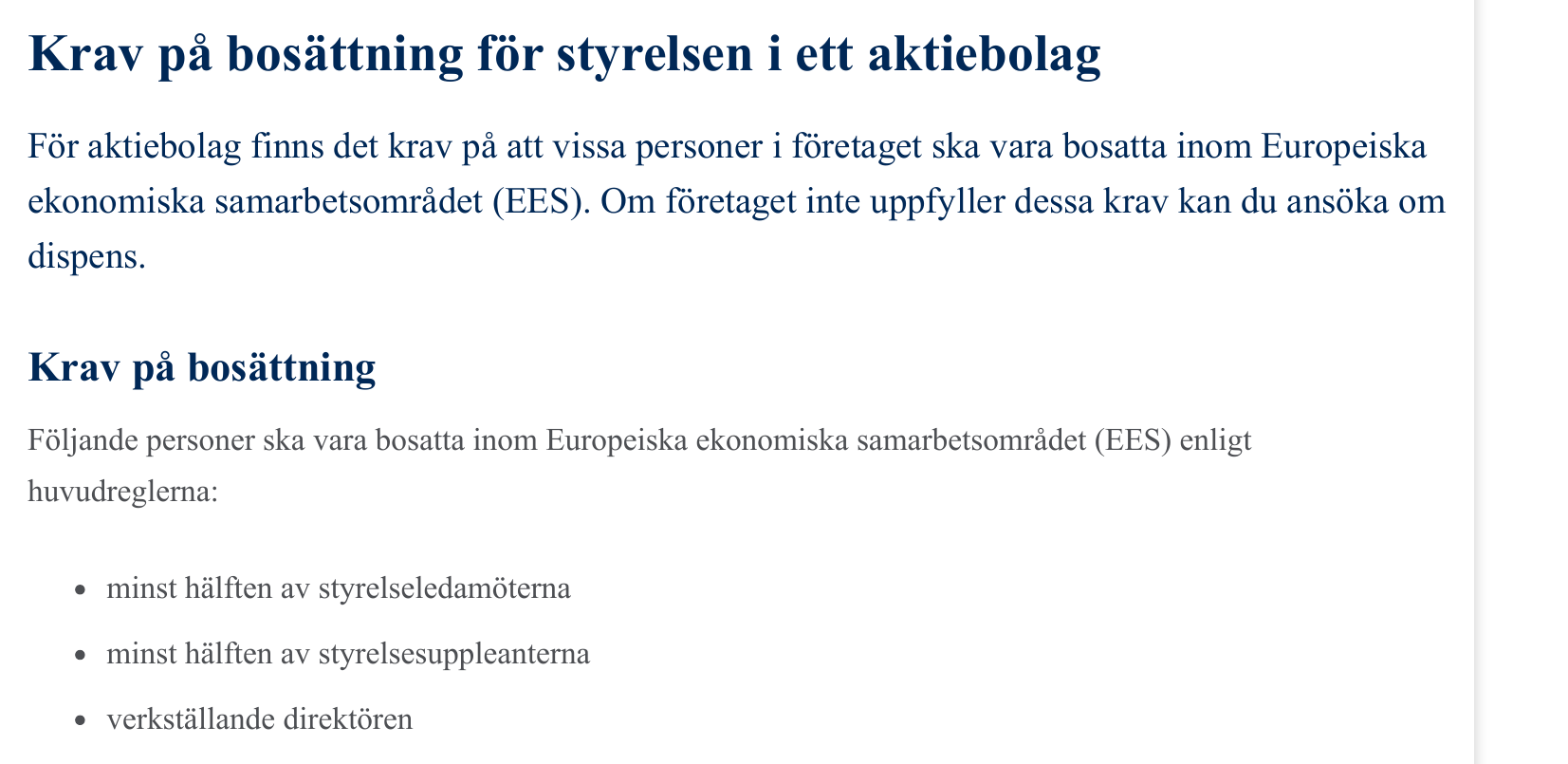
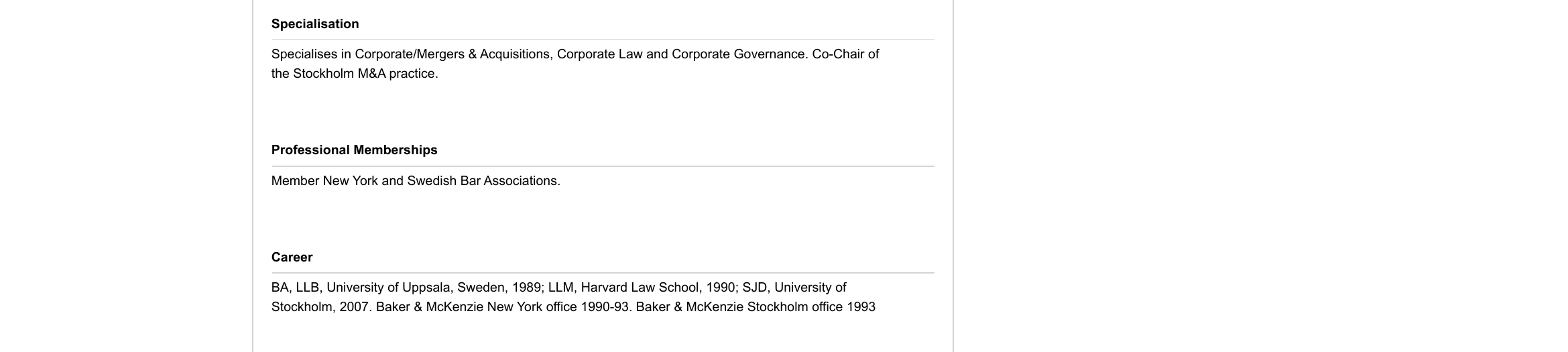
Neither Holland nor Addison was resident in the EEA21, which is normally required for at least half the board members of a Swedish limited company22. They applied for and were granted an exemption from the residency requirement23. Because no authorised representative lived in Sweden, Carl Svernlöv, a partner at the law firm Baker McKenzie in Stockholm and a professor of law2425, was appointed as agent for service of process.

Kapitel 3

Twenty-two permits, a growing map

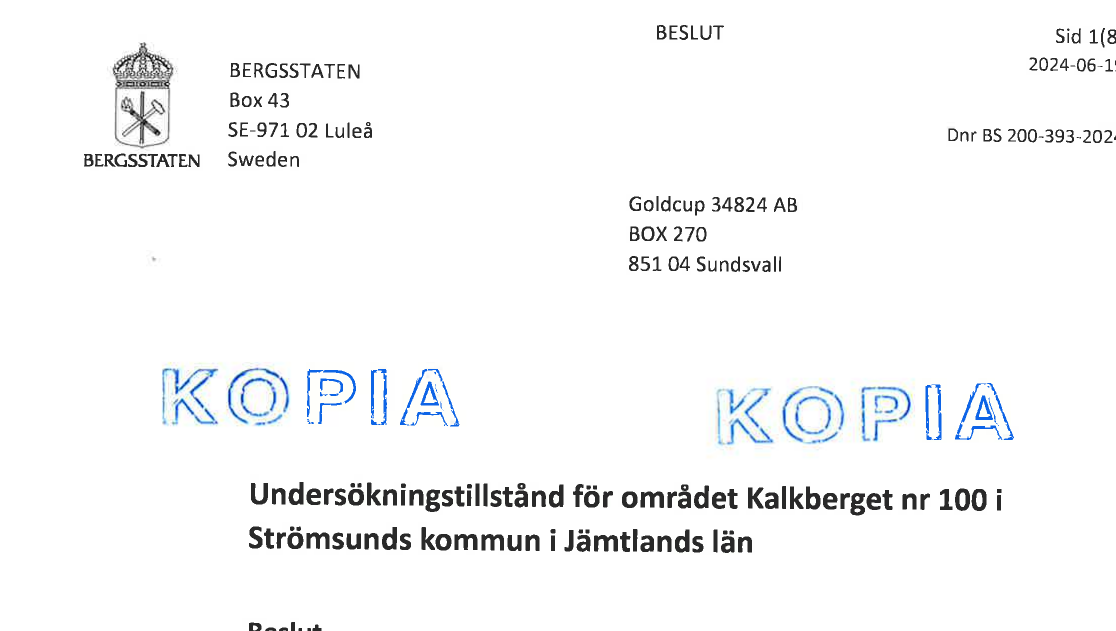
Already in April 2024, before the name change had even been registered with Bolagsverket (the Swedish Companies Registration Office)26, the company filed a large batch of applications with Bergsstaten (the mining inspectorate) for permits to prospect for metals at a number of sites in northern Sweden. The applications were submitted under the company’s old shelf-company name, Goldcup 34824 AB27. In June 2024, fourteen exploration permits were granted, together covering 67,340 hectares, an area of roughly 673 square kilometres28.

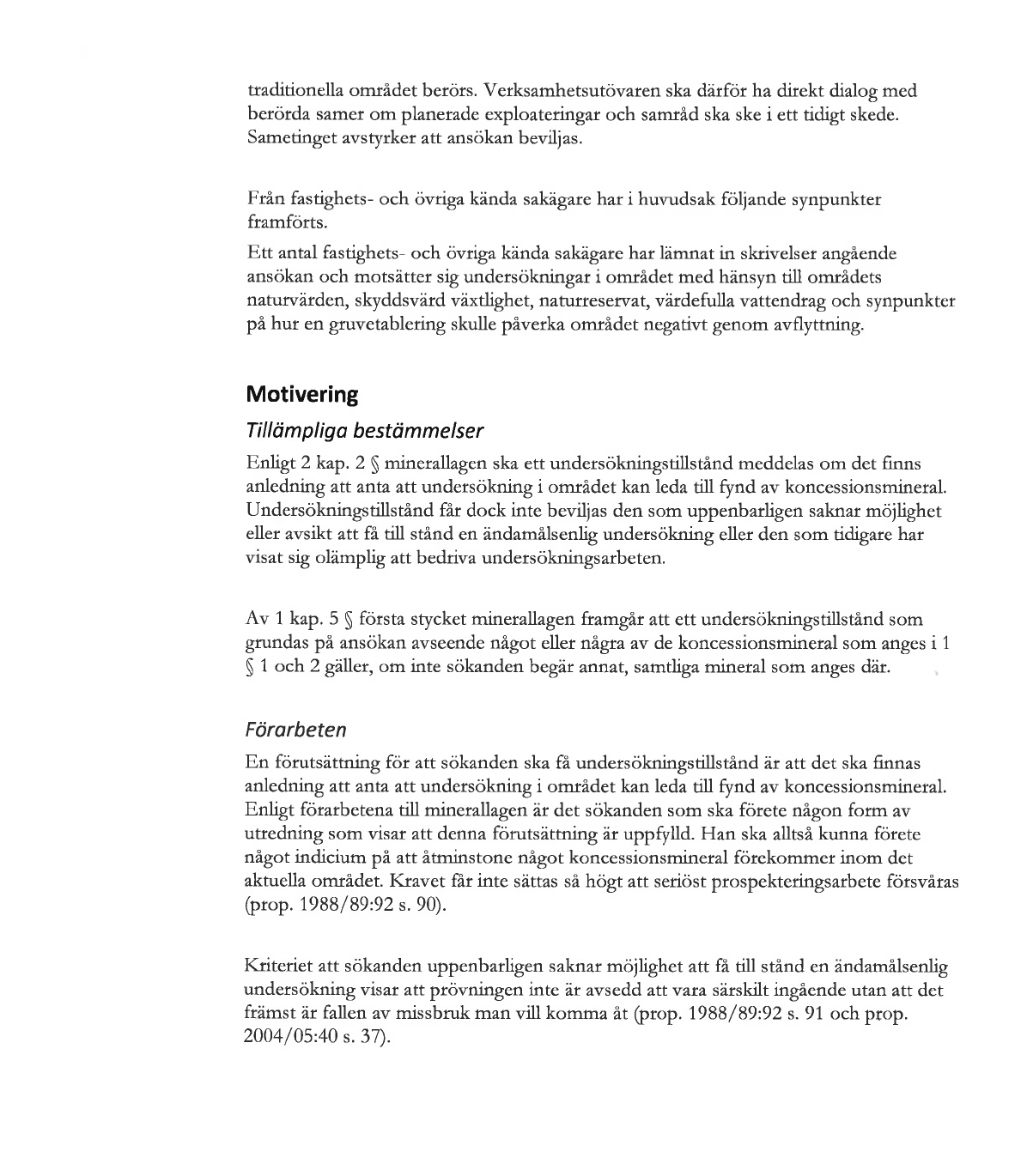
The consultation round had produced submissions highlighting national interests for reindeer husbandry, as is usually the case when exploration permits are applied for. The permits were granted regardless. That is not, in itself, surprising. The Minerals Act (minerallagen) is clear: an exploration permit shall be granted where there is reason to believe that exploration may lead to a discovery. No proof of financial capacity is required, no extensive background check29. At the time of its application the company had SEK 25,000 in share capital, the legal minimum30, the same as this newspaper.

During 2024 and 2025 Energy X92 went on applying for and being granted further permits, among other places in the municipalities of Åre, Krokom, Storuman and Arvidsjaur31. When the Riksdag (the Swedish parliament) voted on 5 November 2025 to lift the ban on uranium extraction in Sweden, the company’s exploration permits automatically came to cover uranium as well, without any new application being required32.

Kapitel 4

Three late-filing fees

During the same period, however, the subsidiary was struggling with the most basic requirements placed on a Swedish limited company.

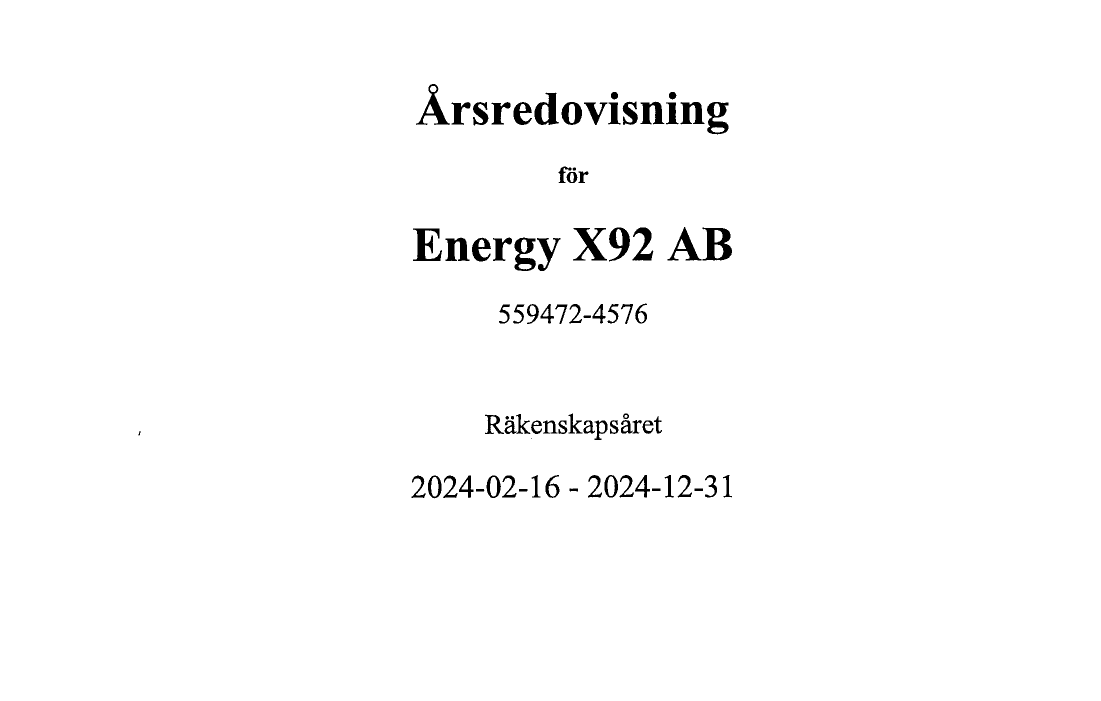
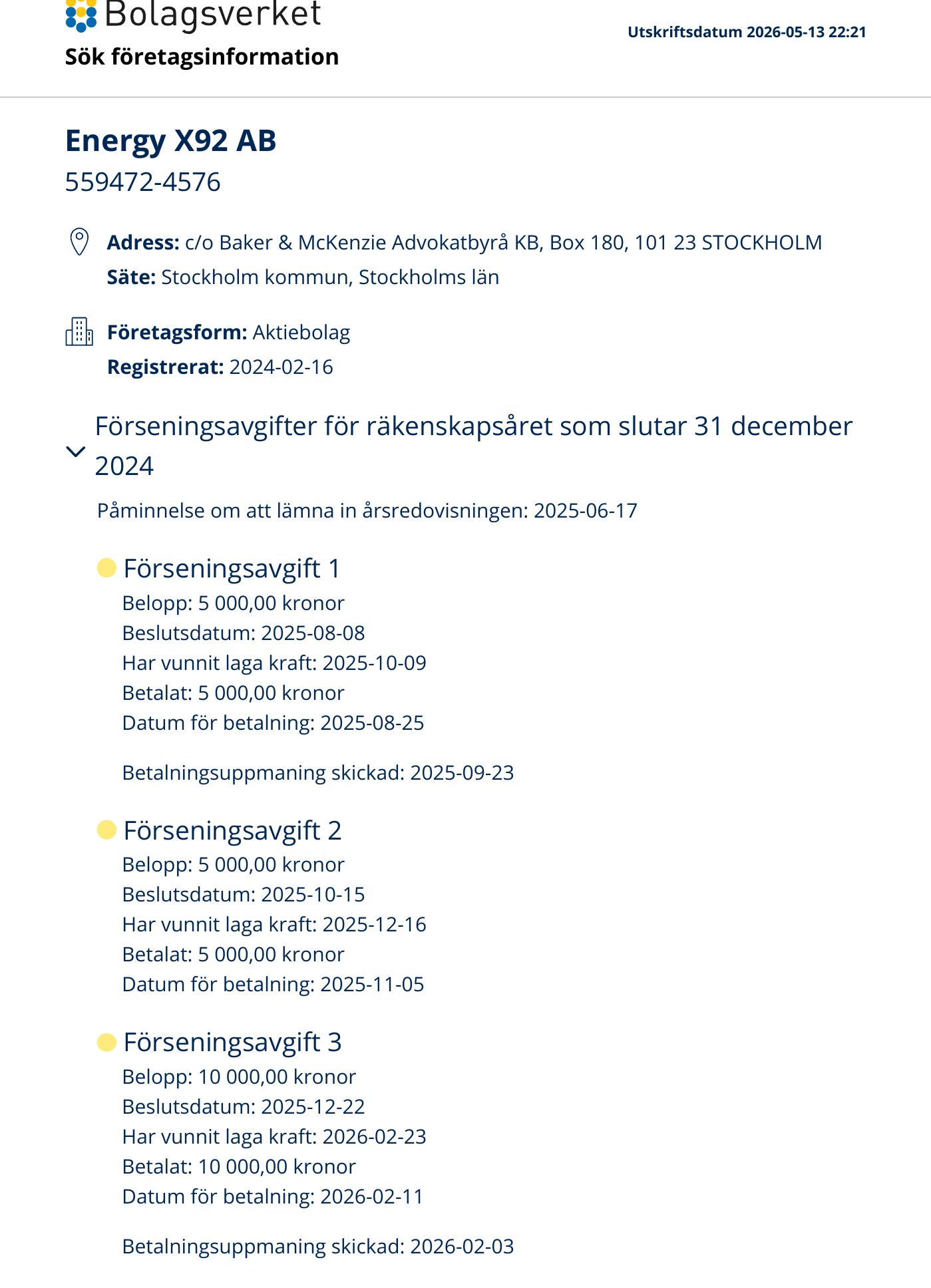
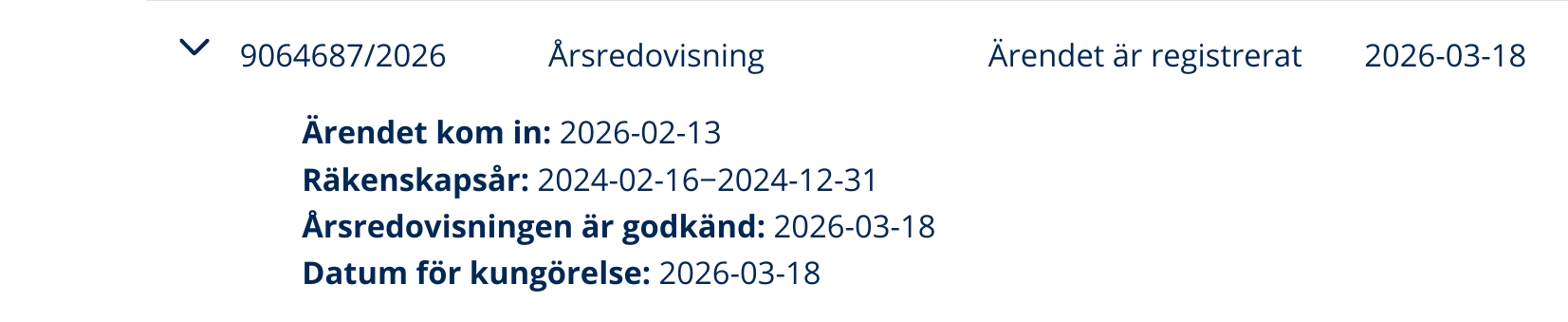
Energy X92’s financial year for 2024 ended on 31 December33. The annual report should have been filed with Bolagsverket by 31 July 2025 at the latest. It was not. In August 2025, Bolagsverket issued a first late-filing fee of SEK 5,000. In October a second one followed, also SEK 5,000. In December a third was added, this time SEK 10,00034. The annual report reached Bolagsverket on 13 February 2026, 197 days late. It was registered on 18 March35.

Under Bolagsverket’s own rules, a company that fails to file its annual report within eleven months of the end of the financial year risks being issued with a compulsory liquidation order36.

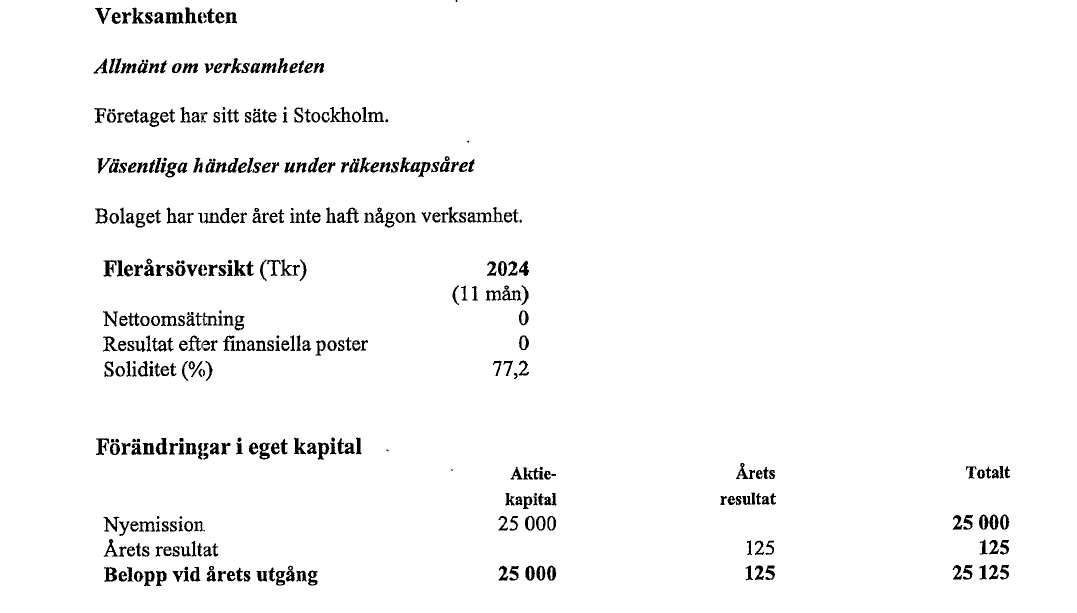
In its 2024 annual report the company stated that it had conducted no operations during the year37, despite having been granted fourteen exploration permits during the same period38.

Kapitel 5

The wrong beneficial owner

In parallel, another issue persisted. When Bolagsrätt i Sundsvall created the shelf company, the firm’s own lawyer was registered as verklig huvudman, that is, the person who ultimately owns or controls a company39. That was correct at the time. But when the company was sold to Tasmania Data Infrastructure on 7 March 2024, control passed to the new owners40. Under the Beneficial Ownership Registration Act (lagen om registrering av verkliga huvudmän) the change must be reported without delay41. The party that created the shelf company had no responsibility after the sale42.

When Årebladet checked the records, most recently on 21 May 2026, more than two years after the change of ownership, the lawyer from Sundsvall was still listed as the registered beneficial owner43. He has no connection to the company’s operations and had done nothing wrong, which is why Årebladet has chosen not to name him.

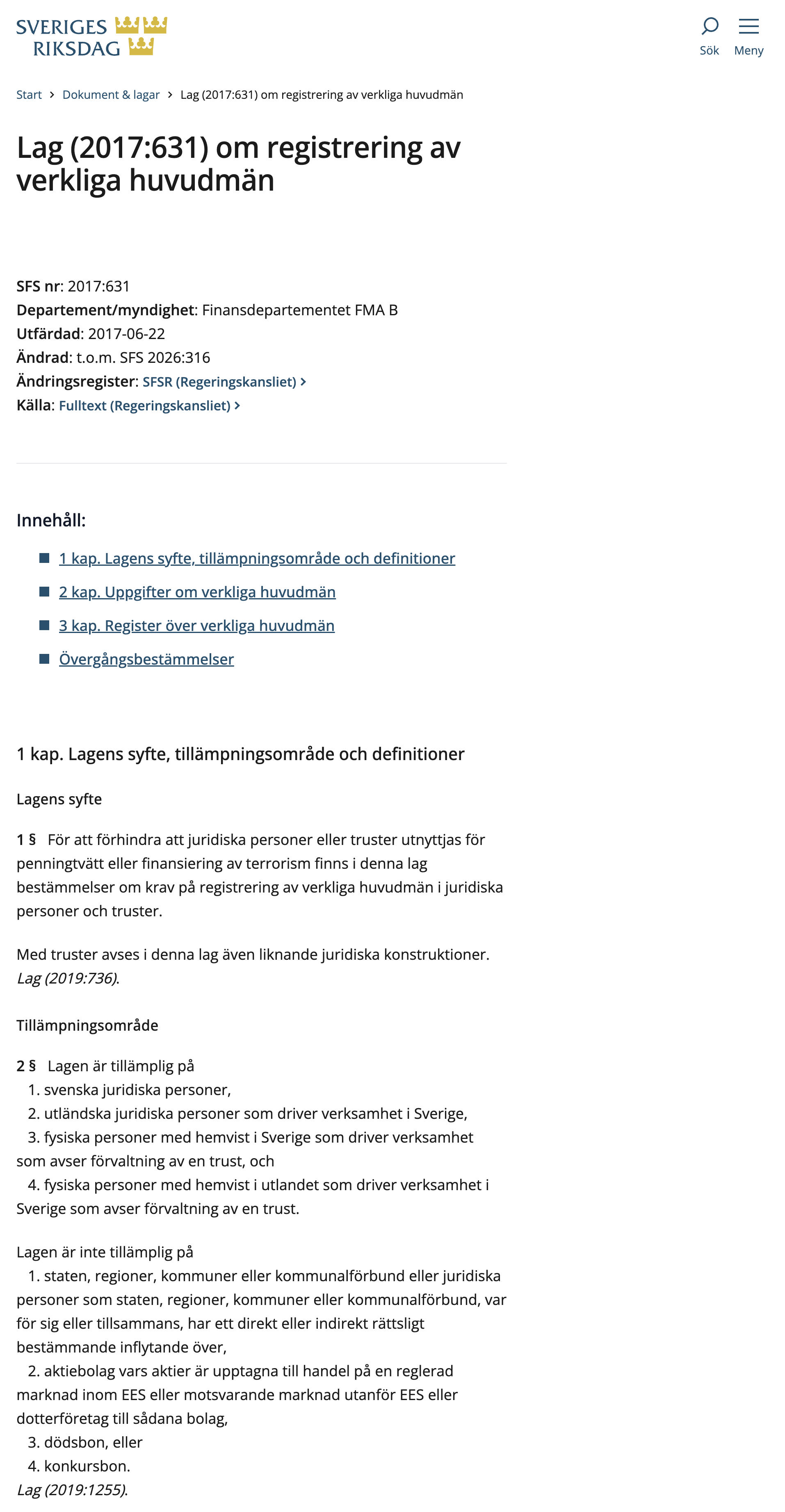
The Beneficial Ownership Registration Act exists to prevent companies being used for money laundering or terrorist financing44. It applies to most companies and to foreign legal persons (a legal person being a company) that conduct business in Sweden. Bolagsverket confirms that there is no exemption for subsidiaries of unlisted foreign parents45.
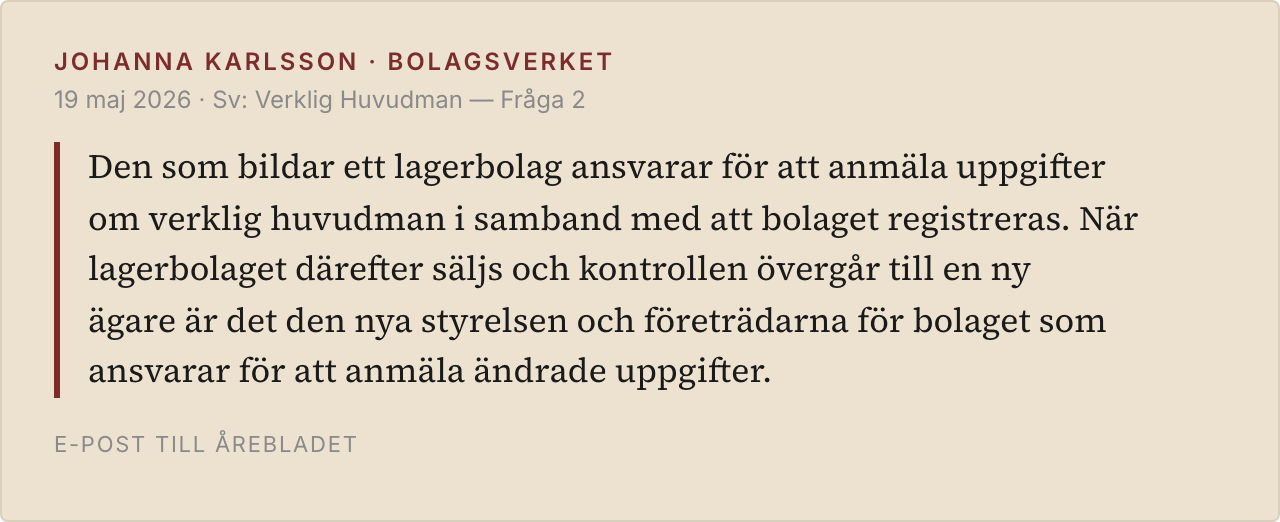
“Whoever creates a shelf company is responsible for filing the beneficial-ownership details at the time the company is registered. When the shelf company is subsequently sold and control passes to a new owner, it is the new board and the company’s representatives who are responsible for filing any changes to the beneficial-ownership details with the register,” Bolagsverket writes to Årebladet46.
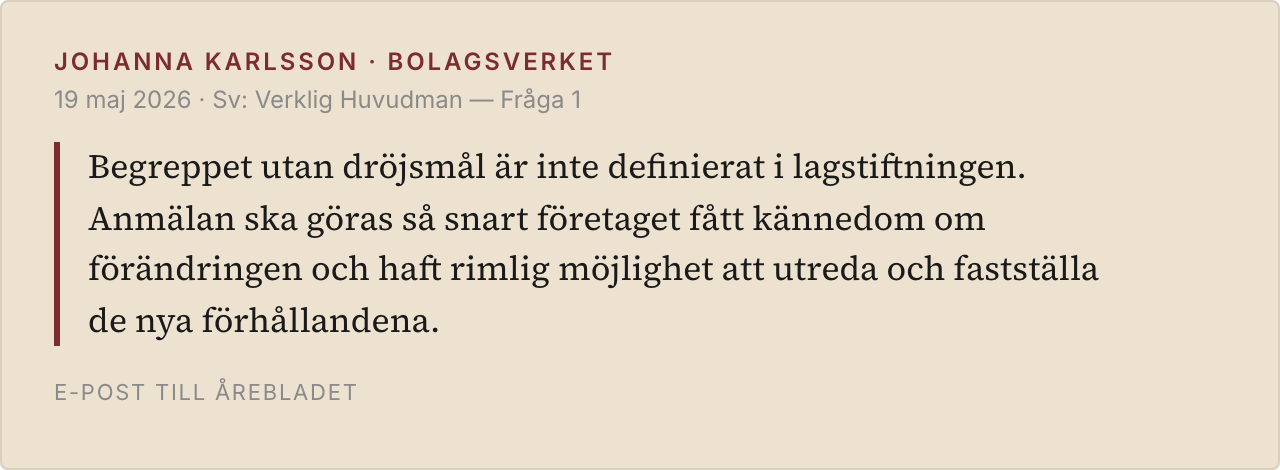
The notion of “without delay” is, however, not defined in the legislation.

“There is no explicit statutory deadline for when a change notification must, at the latest, be filed. The notification shall be made as soon as the company has become aware of the change and has had reasonable opportunity to investigate and establish the new circumstances,” Bolagsverket writes47.
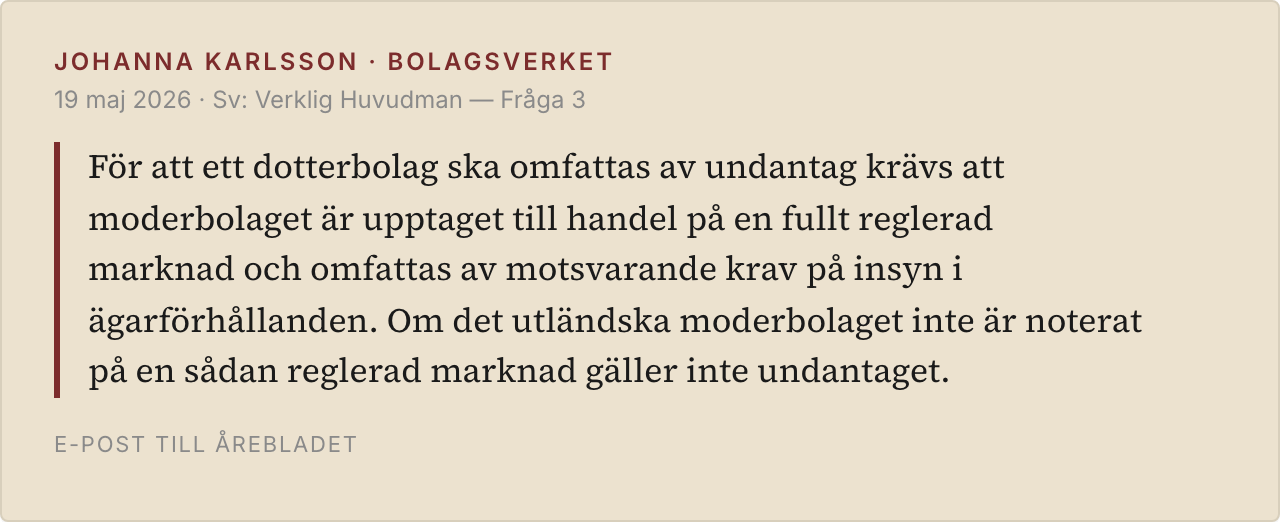
If the information is incorrect, Bolagsverket can order the company to submit accurate details and, as a last resort, flag the entries as erroneous or remove them from the register48.
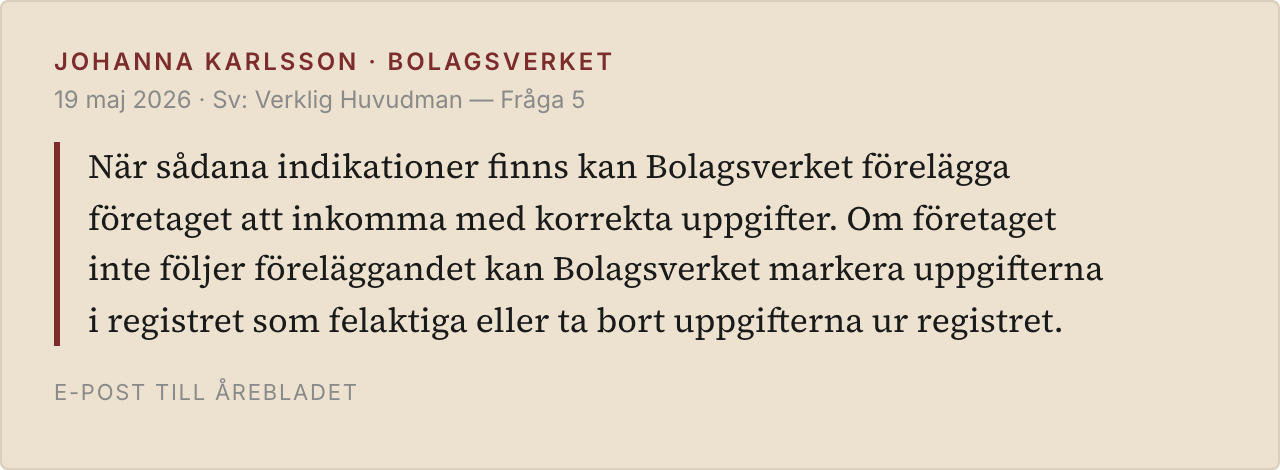
Årebladet asked whether Bolagsverket intends to open supervisory proceedings in this case.

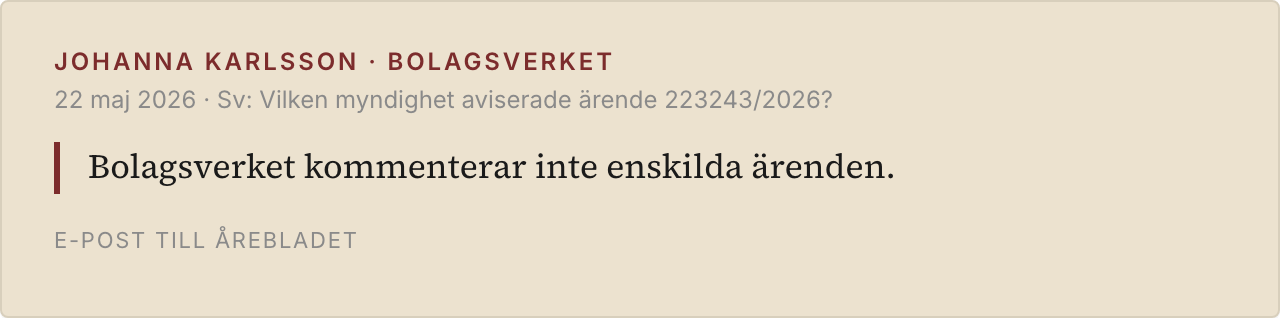
“Bolagsverket does not comment on individual cases, but in general we can say that when we receive information about a suspected error in the register, we draw up a suspicion report which leads to further investigation,” Bolagsverket writes49.
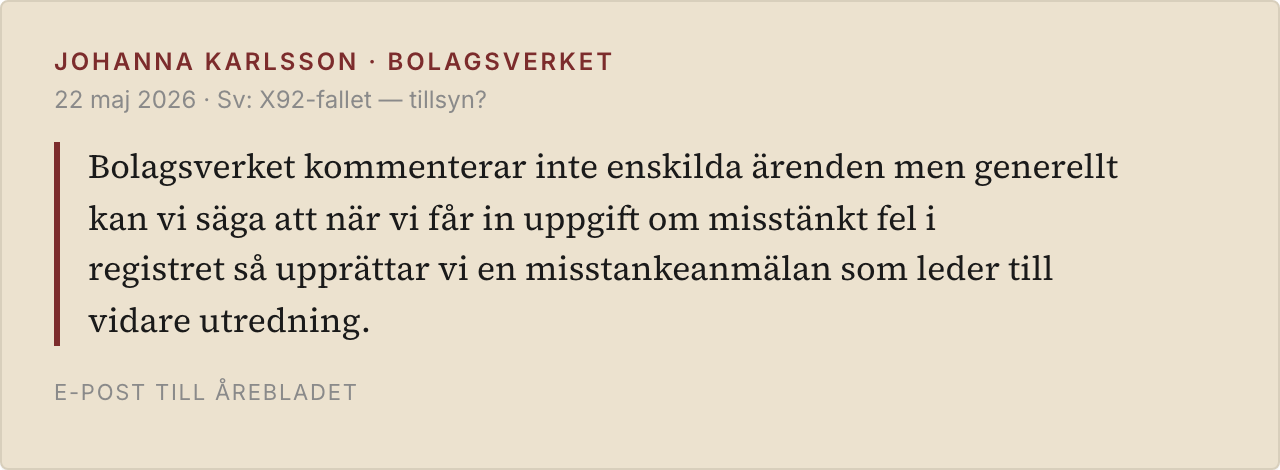
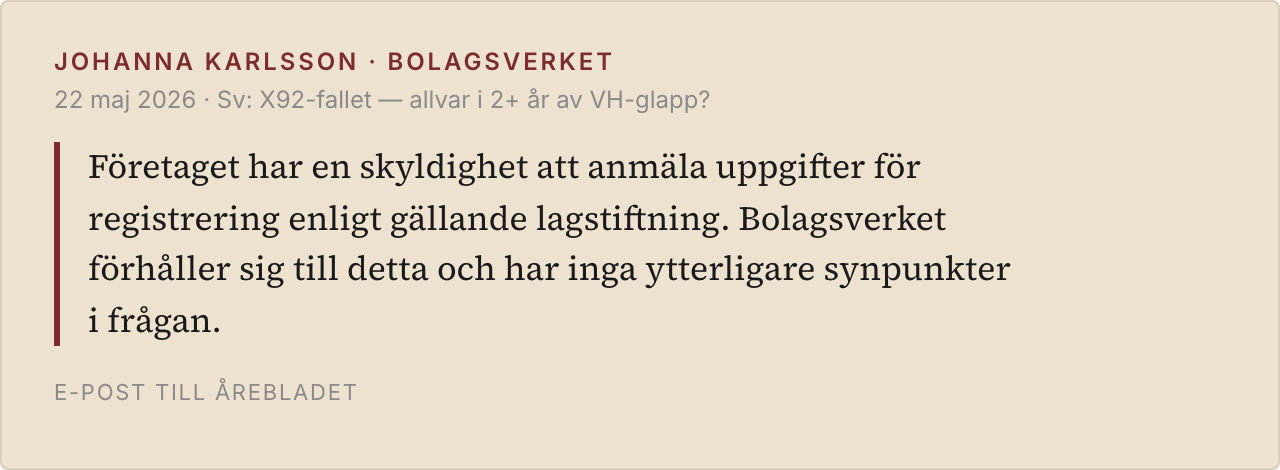
Asked how the authority assesses the seriousness of a time-gap of more than two years, given the legislation on money laundering and transparency, Bolagsverket replies that the company has an obligation to file information for registration in accordance with applicable law.

“Bolagsverket takes that view and has no further comment on the matter,” the authority writes50.
Kapitel 6

Bergsstaten's assessment

Årebladet put a question to SGU (the Geological Survey of Sweden), to which Bergsstaten belongs, about what is examined when assessing an applicant.

“The assessment is not intended to be particularly thorough. It is cases of abuse of the right of exploration that we are after. In most cases this question can be settled without further ado,” SGU writes51.

“It must also be accepted that an applicant intends to transfer its permit when its own resources are exhausted,” SGU writes52.

“Nor is it a requirement that an applicant must be able to carry out the actual work on its own,” writes the bergmästare (the chief mining inspector)53.

When Årebladet highlights precisely the problems with these applications, Bergsstaten says it does not routinely carry out deeper checks, for example against Bolagsverket, when processing exploration-permit applications54.

“In view of what has emerged in the applications in question, the bergmästare has not found it to be evident that the applicant lacked the means or intent”5556.

Årebladet also asked what happens if a person or group that has proven unsuitable in an earlier project buys a new shelf company and applies for permits under the new company name.

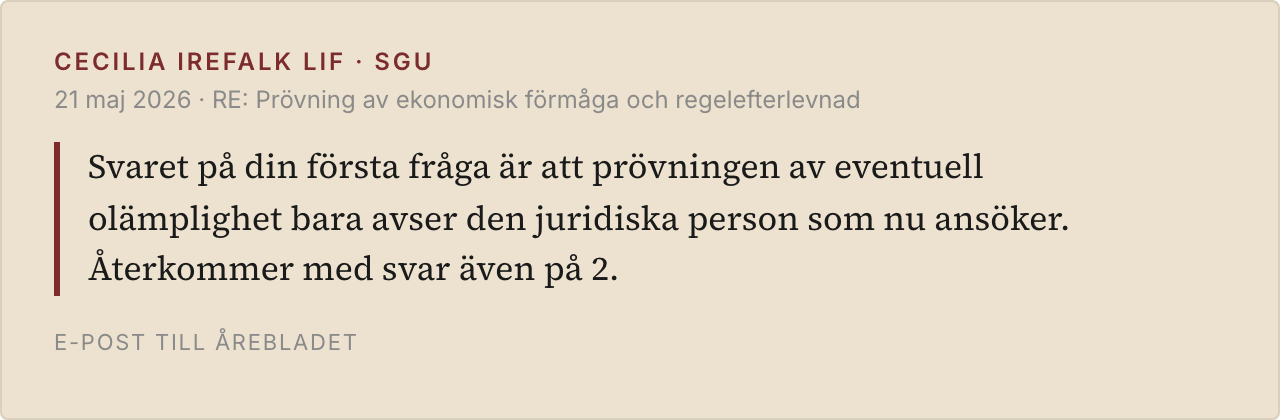
“The assessment of any unsuitability concerns only the legal person now applying,” SGU writes57.

That means it is only the company that is assessed, not the people behind it. An actor that has drawn criticism in a previous company can therefore buy a new shell and apply for permits without Bergsstaten considering itself to have a mandate to weigh that history.

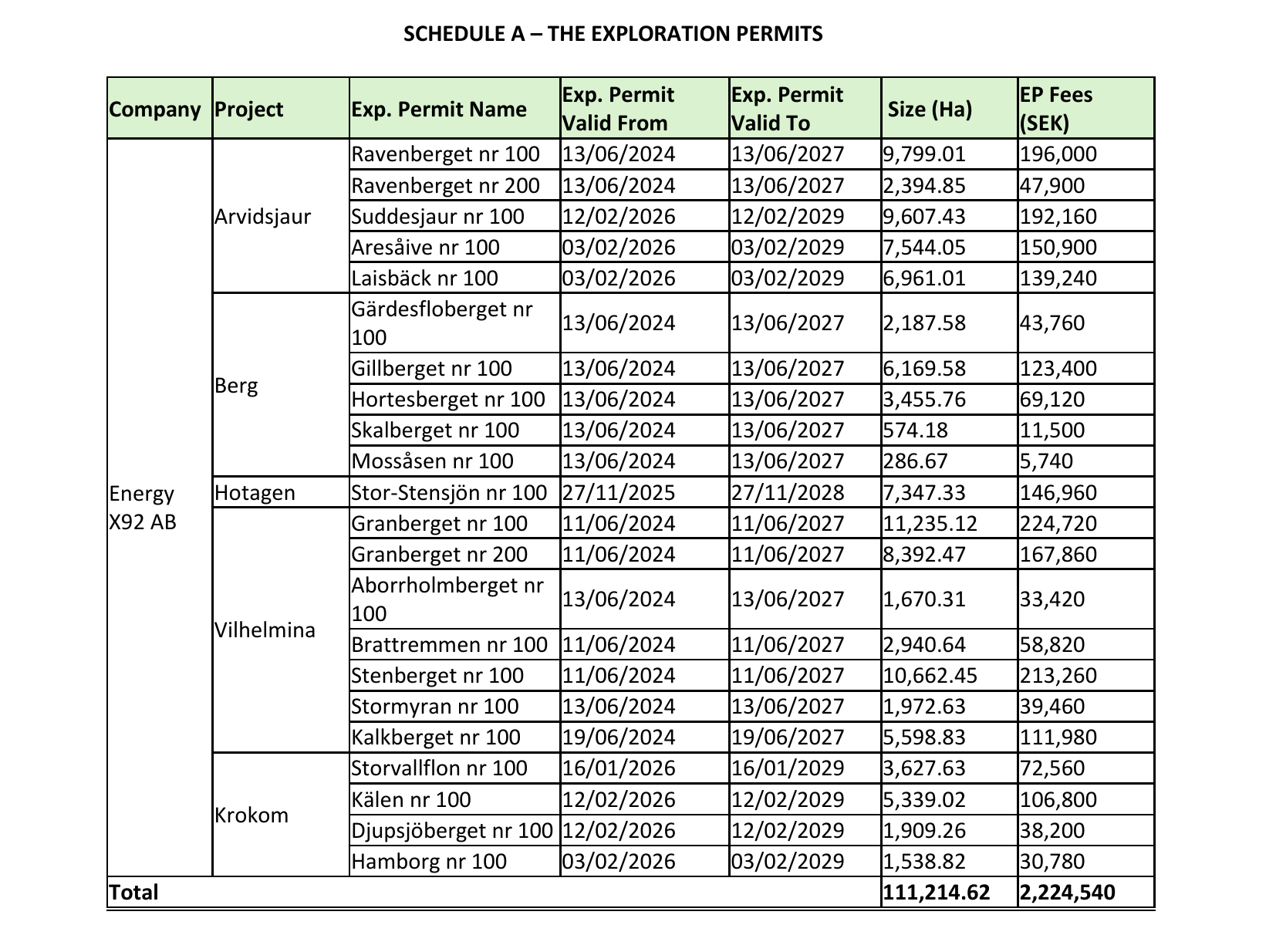
In total, Energy X92 holds 22 exploration permits in Sweden58. On its website and in its prospectus, however, it highlights only the 14 permits in the Gillberget, Ravenberget and Vilhelmina areas59. Other permits, such as Stor-Stensjön nr 100 in Krokom municipality, where the Swedish state drilled 44 test boreholes for uranium in the 1980s, are not highlighted. Nor is Hamborg nr 100 in Åre municipality, where Aura Energy carried out a test borehole in 2011, also looking for uranium.

Kapitel 7

The road to the stock market

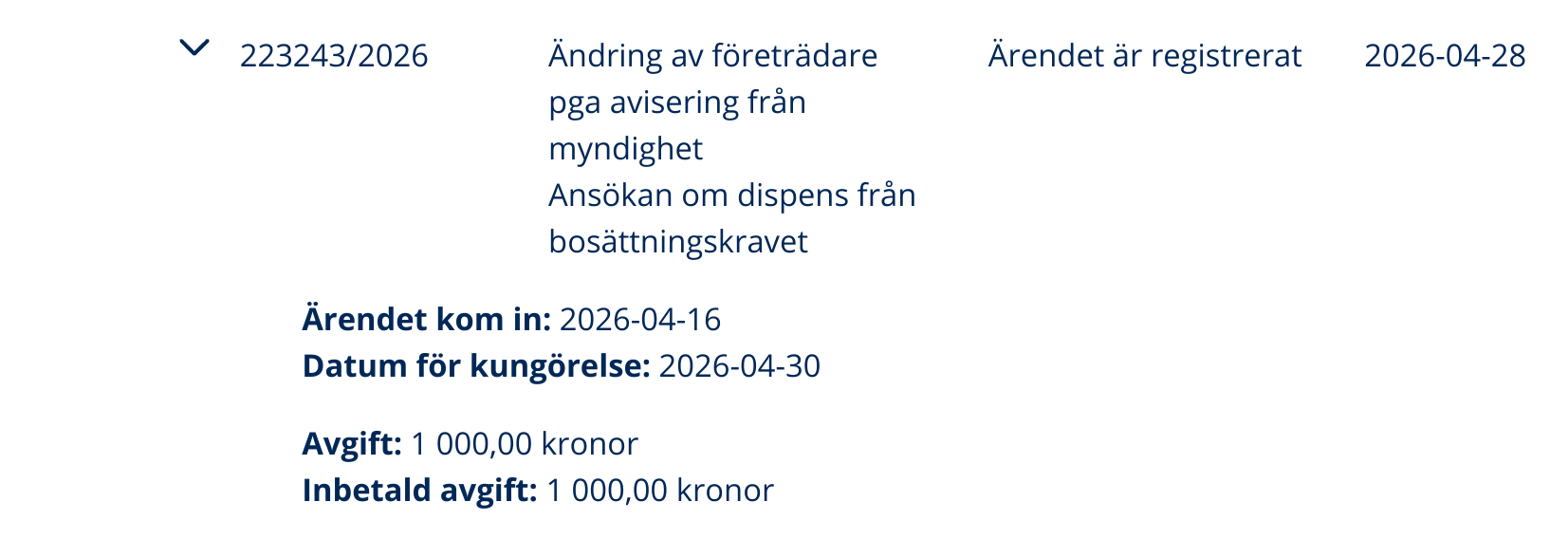
In April 2026, Holland and Addison applied for a renewed exemption from the residency requirement. The existing exemption was due to expire on 30 April. The new one was granted only until 31 October 2026, an unusually short period of just six months; the company’s previous exemption had run for two years. The case (223243/2026) was registered with Bolagsverket as a “change of representative on the basis of notification from another authority”60. Which authority had sent the notification, Bolagsverket would not say, citing its policy of not commenting on individual cases61.

Årebladet asked why the new exemption was so short.

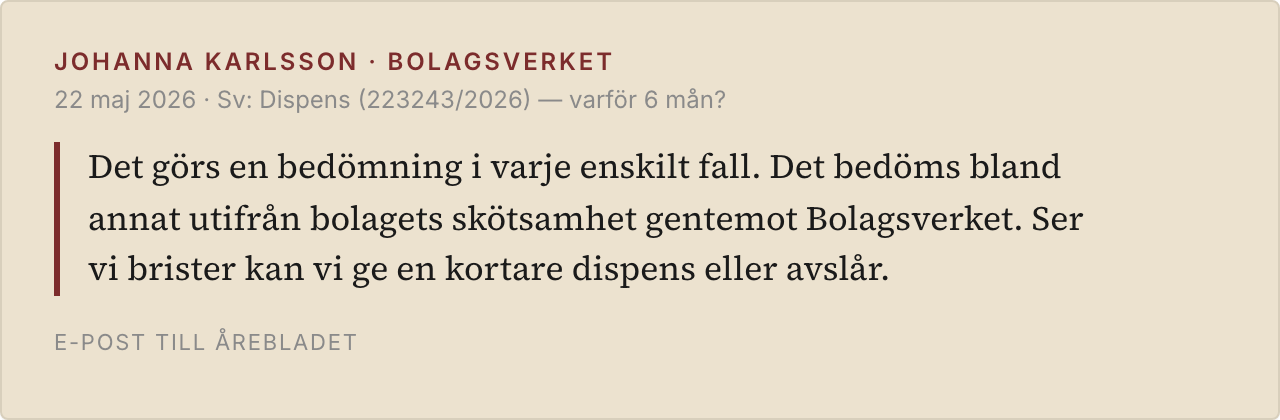
“An assessment is made in each individual case. Among other things, it is assessed based on the company’s conduct vis-à-vis Bolagsverket. If we see shortcomings, we may grant a shorter exemption or refuse,” Bolagsverket writes62.

Asked what would have to be the case for an exemption not to be granted at all, the authority says the assessment is based on an overall picture of the areas Bolagsverket handles.

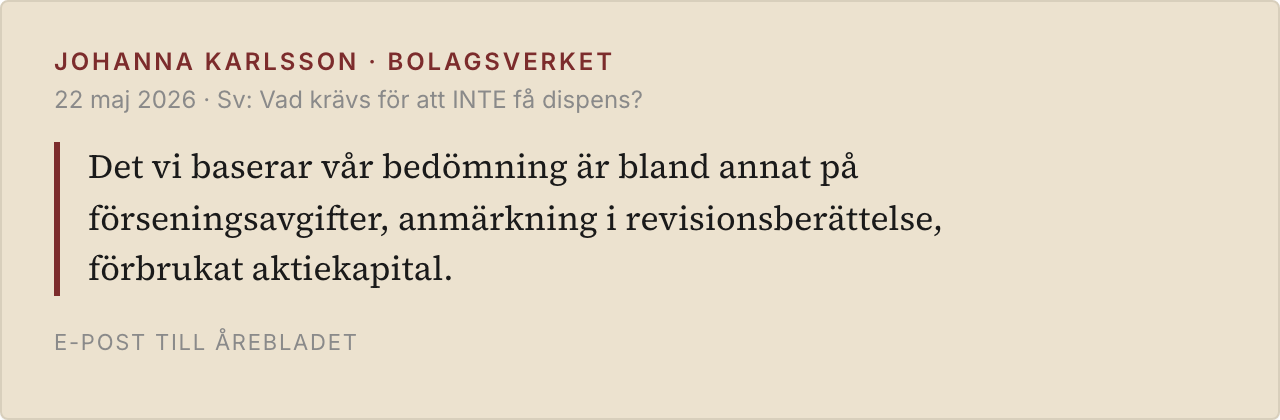
“We base our assessment on, among other things, late-filing fees, remarks in the auditor’s report, and consumed share capital,” Bolagsverket writes63.

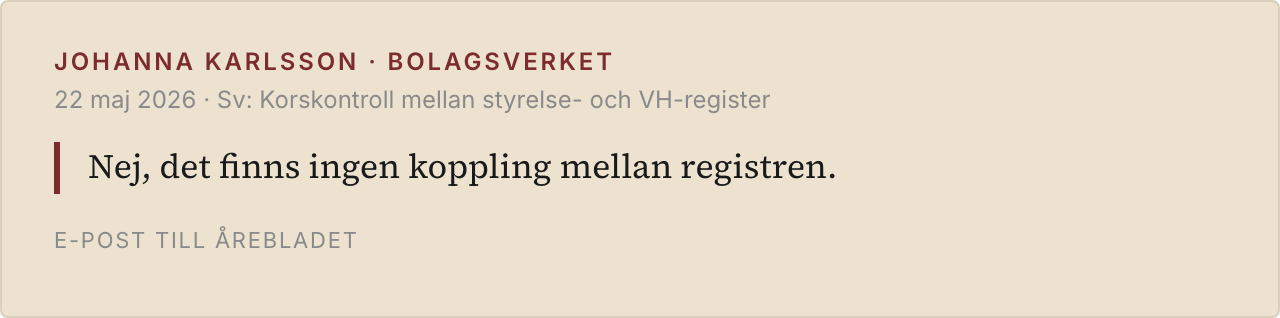
That the company had also had an incorrectly registered beneficial owner for more than two years did not, however, feed into the exemption assessment. There is in fact no link at all between the two registers: neither in an exemption assessment, nor when a new foreign board is registered, is any automatic check made against the beneficial-ownership register.

“No, there is no link between the registers,” Bolagsverket replies to both questions64.

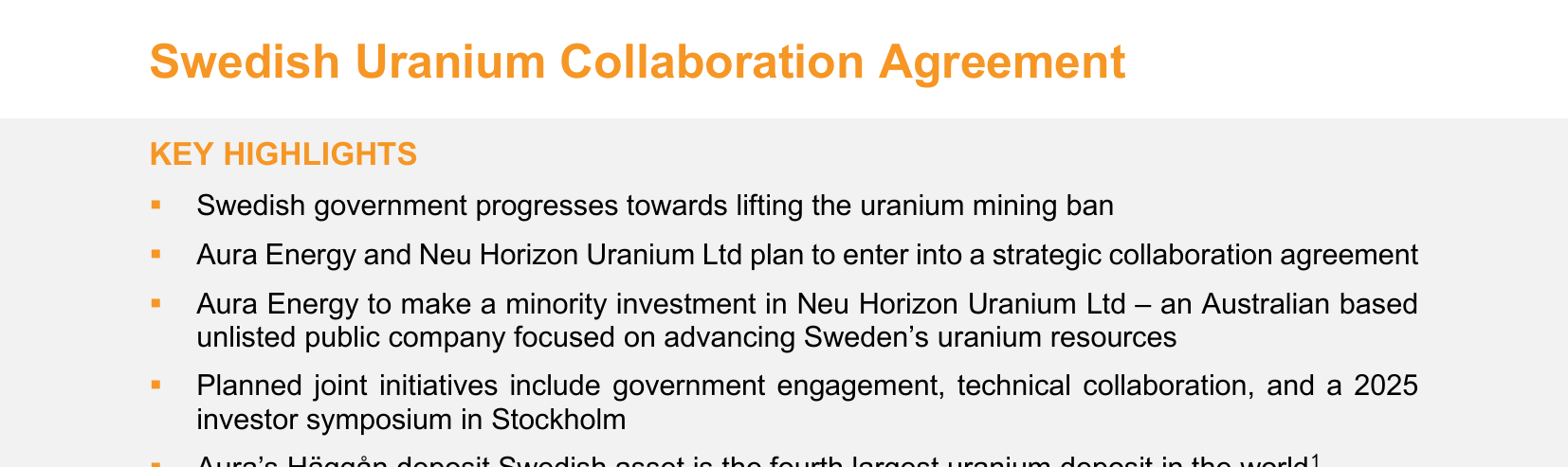
In the meantime the parent company, Neu Horizon, had continued to build out its Swedish portfolio. In June 2025 the Australian uranium company Aura Energy invested A$100,000 and signed a collaboration agreement with Neu Horizon65. The collaboration is to cover, among other things, contacts with government and regulators. Whether they are also collaborating around what Aura learned from its test borehole at Hamborg is not established.

Aura Energy owns the subsidiary Vanadis Battery Metals AB, which is applying for an bearbetningskoncession (mining concession), that is, permission to build a mine, at Häggån in Oviken66.

In July 2025 Neu Horizon announced a capital raise of A$2 million and appointed Canaccord Genuity as adviser ahead of a stock-market listing67. During the spring the Swedish law firm Cirio carried out a legal due-diligence review ahead of the listing which confirmed that the Swedish subsidiary owned the listed exploration permits and was not subject to any pending litigation, but addressed neither the beneficial owner nor the fact that the annual report had been filed late68.

Kapitel 8

What the investigation shows

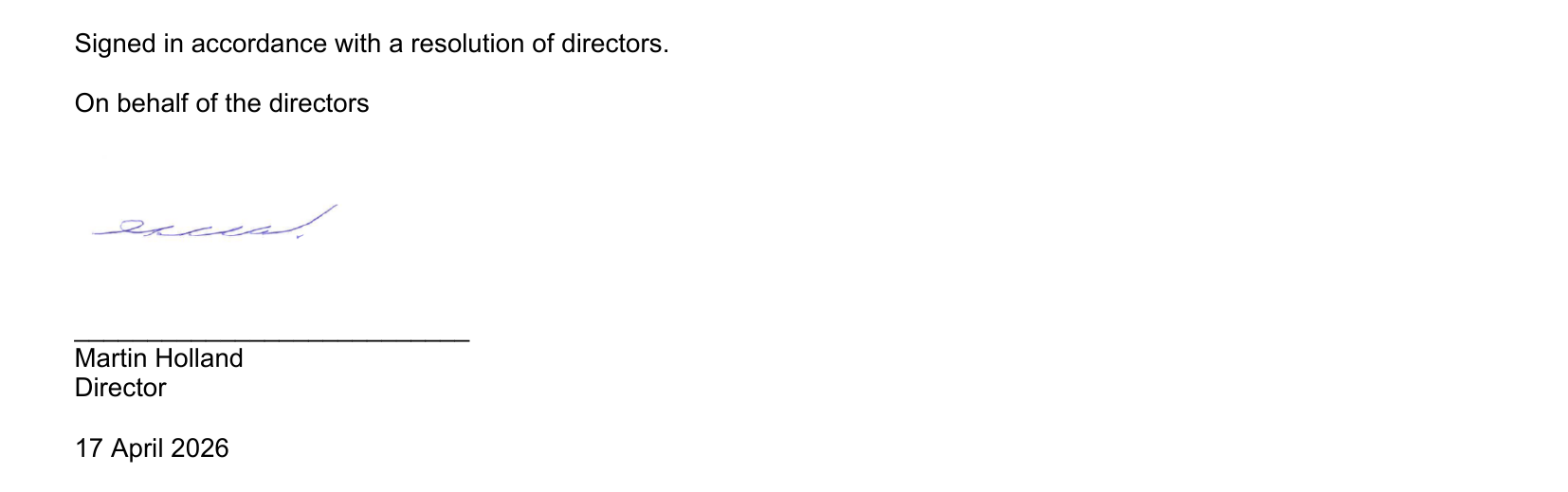
The parent company’s own annual report was also slow in coming. The group’s financial year ended on 30 June 2024, but the accounts were not signed off until 17 April 2026, around 21 months later69. Unlike its subsidiary, that was lawful: as a small private company in Australia, the parent was not obliged to prepare an audited annual report. It was the company’s first audited accounts ever and appears to have been produced for the planned listing.

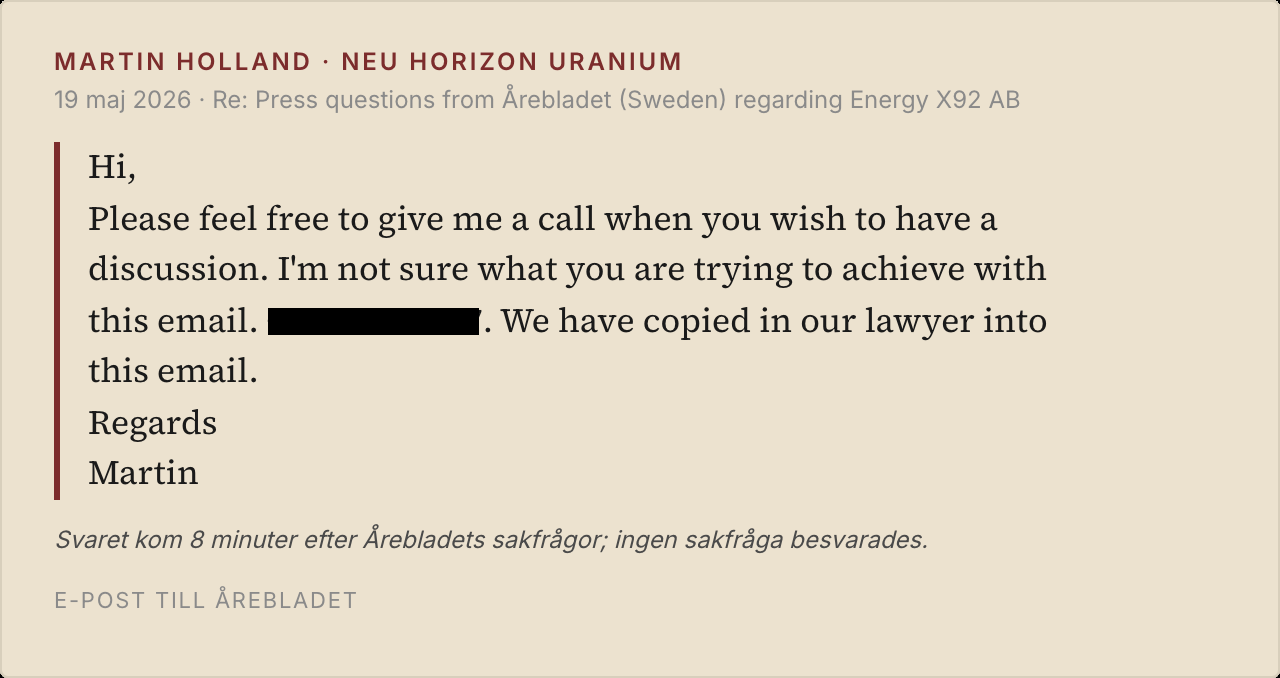
On 19 May, Årebladet sent questions to Martin Holland at Neu Horizon concerning, among other things, the beneficial owner, the late annual report and the company’s Swedish set-up. Within minutes a short reply came back in which Holland asked what Årebladet was trying to achieve with its questions, told us we were welcome to call him, and noted that the company’s lawyer had been copied in70. Årebladet replied that, in matters of this kind, it is the newspaper’s policy to put and receive questions in writing; that the questions were in the previous email; and that any inaccuracies were welcome to be corrected. Årebladet asked for a reply by Thursday 21 May at 15:00 Swedish time. At the time of publication no further reply had been received71.

On the same day the questions were sent, Neu Horizon filed its prospectus with the Australian regulators ASIC and ASX. According to the planned timetable, the offer to investors opens on 15 June and first trading on the ASX is set for 29 June 202672.

Årebladet has not been able to find any sign that the company has acted in breach of Swedish law in its exploration activities. Fieldwork has been carried out in collaboration with, among others, Uppsala University73, and the company has applied for and obtained its permits through the channels the Minerals Act prescribes.

But the investigation shows that a company can operate in Sweden with an incorrectly registered beneficial owner for more than two years74, file its annual report half a year late75, and still go on being granted exploration permits76. Today the company has a total exploration area of around 1,112 km²77, and according to Bergsstaten it now has only a registered security of SEK 37,956 lodged for its work78. For now, the company’s actual investments in Sweden are quite small, only a fraction of the loss it wrote off on its failed bitcoin venture79.

Tillstånden, ett-för-ett

Bolagets 22 undersökningstillstånd

22 tillstånd 7 i Jämtland 15 övriga Norrland

Visar 22 av 22

Källa: Bergsstatens öppna mineralrättigheter , öppen data per 2026-05-21

Sekundärt: Schedule A: NHU Prospectus 19 maj 2026 · Schedule A (utdragsbild)

Bergsstatens snapshot 2026-05-21 är primärkälla. NHU:s börsprospekt (Schedule A) listar samma 22 tillstånd och fungerar som korsverifierad sekundärkälla. Alla 22 tillstånd har polygon-geometri (13 från det kommun-filtrerade in-scope-snapshotet 2026-05-21; 9 backfillade från råa SGU-paketet 2026-05-26, projicerade SWEREF99 TM → WGS84). Totalyta ca 111 214 ha = ca 1 112 km². 'In-scope' = de sju tillstånden i klustret Åre/Berg/Krokom/Ånge som syns på Årebladets tryckta karta; 'national' = de övriga femton spridda över Norrland.

Polygon-geometri för samtliga 22 tillstånd är hämtad från SGU:s öppna mineralrättigheter (paket 2026-05-26, projicerat SWEREF99 TM → WGS84).

Kapitel 4 · Tillstånden Så växte tillståndsportföljen 22 tillstånd · april 2024 → februari 2026
Stripchart över Energy X92:s tillståndsväxt 2024–2026 Vågrät tidslinje med en prick per ansökt och beviljat tillstånd, samt en kumulativ kurva som klättrar från noll till 13 beviljade tillstånd mellan april 2024 och februari 2026. Annotationer markerar uranförbudets upphävande i november 2025 och den andra ansökningsvågen. apr 2024 okt 2024 apr 2025 okt 2025 feb 2026 13 beviljade 0 Brattremmen nr 100, ansökt 2024-04-04 Granberget nr 100, ansökt 2024-04-04 Granberget nr 200, ansökt 2024-04-04 Stenberget nr 100, ansökt 2024-04-04 Aborrholmberget nr 100, ansökt 2024-04-05 Hortesberget nr 100, ansökt 2024-04-05 Mossåsen nr 100, ansökt 2024-04-05 Ravenberget nr 100, ansökt 2024-04-05 Ravenberget nr 200, ansökt 2024-04-05 Skalberget nr 100, ansökt 2024-04-05 Stormyran nr 100, ansökt 2024-04-05 Gärdesfloberget nr 100, ansökt 2024-04-08 Gillberget nr 100, ansökt 2024-04-08 Kalkberget nr 100, ansökt 2024-04-08 Stor-Stensjön nr 100, ansökt 2025-09-29 Storvallflon nr 100, ansökt 2025-11-12 Aresåive nr 100, ansökt 2025-12-02 Djupsjöberget nr 100, ansökt 2025-12-02 Hamborg nr 100, ansökt 2025-12-02 Kälen nr 100, ansökt 2025-12-02 Laisbäck nr 100, ansökt 2025-12-02 Suddesjaur nr 100, ansökt 2025-12-08 Brattremmen nr 100, beviljat 2024-06-11 Stenberget nr 100, beviljat 2024-06-11 Aborrholmberget nr 100, beviljat 2024-06-13 Gärdesfloberget nr 100, beviljat 2024-06-13 Gillberget nr 100, beviljat 2024-06-13 Hortesberget nr 100, beviljat 2024-06-13 Stormyran nr 100, beviljat 2024-06-13 Kalkberget nr 100, beviljat 2024-06-19 Stor-Stensjön nr 100, beviljat 2025-11-27 Storvallflon nr 100, beviljat 2026-01-16 Hamborg nr 100, beviljat 2026-02-03 Djupsjöberget nr 100, beviljat 2026-02-12 Kälen nr 100, beviljat 2026-02-12 Beviljade Ansökta 14 tillstånd beviljas jun 2024 Uranförbudet lyfts nov 2025 8 nya ansökningar sep–dec 2025 7 nya beviljanden nov 2025–feb 2026

Pengarna

A$8 936 251 skrevs ner till noll

Innan Neu Horizon blev ett uranbolag var det ett bitcoin-bolag. Utrustningen, bokförd till nästan nio miljoner australiska dollar, togs aldrig i drift. Den fysiska skrotningen skedde i oktober 2025. Samtidigt har bolaget bokfört blygsamma belopp i Sverige och Kanada.

A$8 936 251 (≈ 61 mkr)

Bitcoin-utrustning Tasmanien, nedskriven 2023, fysiskt skrotad i oktober 2025

A$6 102 113 aktier emitterade som betalning för utrustningen (2022) A$2 834 138 ingående saldo per 1 juli 2022 (ej uppdelat i räkenskaperna)

Bitcoin

A$8 936 251 (≈ 61 mkr)

skrotat till noll

A$6 102 113 i aktier · A$2 834 138 i ingående saldo.

Sverige

A$406 236 (≈ 2,8 mkr)

Bokfört t.o.m. 30 juni 2025

FY24: A$228 021 aktiverat · FY25: A$178 215 (inkl. A$50 000 aktiebaserad ersättning)

Kanada

A$932 441 (≈ 6,4 mkr)

Utgivet t.o.m. 31 december 2025

Optionsavtal Woods Uranium med Fortune Bay Corp., signerat 25 juli 2025. A$50 000 kontant + A$250 000 i aktier till säljaren + A$632 441 i utforskning.

Belopp i miljoner australiska dollar (A$ M). Planerade belopp förutsätter att ASX-noteringen fulltecknas (A$ 15 M maximal emission). SEK-omräkning i blocken ovan: 1 A$ ≈ 6,85 kr (ca-kurs 2026-05).
Bitcoin Tasmanien (nedskrivet till noll) A$ 8,94 M aktiverat 2022, nedskrivet 2023 skrotat oktober 2025 varav ≥ 6,10 i aktieersättning Sverige (uran-utforskning) A$ 7,61 M planerat vid maximal emission (A$ 15 M) A$ 0,41 M bokfört (FY24 + FY25) Vid minsta emission: A$ 4,81 M Kanada (Woods Uranium, option) A$ 4,33 M planerat vid maximal emission A$ 0,93 M utgivet (kontant + aktier + utforskning) Vid minsta emission: A$ 2,92 M 0 2 4 6 8 10 A$ M Nedskrivet Bokfört / utgivet Planerat (vid full ASX-emission) Källor: NHU Annual Report 30 Jun 2024 · NHU Annual Report 30 Jun 2025 · NHU Interim Report 31 Dec 2025 · NHU Prospectus 19 May 2026.

Planerad användning

Om noteringen fulltecknas: A$ 15 M över 2 år

  1. Sverige: uran-utforskning A$7 610 000 50,7%
  2. Kanada: Woods Uranium-option A$4 325 000 28,8%
  3. Huvudrådgivar-arvoden (Canaccord) A$768 750 5,1%
  4. Övriga emissionskostnader A$768 569 5,1%
  5. Rörelsekapital A$1 527 681 10,2%

Vid minsta emission (A$ 12 M) krymper Sverige-andelen till A$4 810 000 och Kanada till A$2 925 000. Källa: NHU Prospekt 19 maj 2026, §2.

Bolagets år

Energy X92 i tiden

Från bitcoin-dröm i Tasmanien till uranprospektering i Norrland, med en verklig huvudman som stått fel i över två år.

Före Energy X92: bitcoin-planen i Tasmanien (2021–feb 2024) 3 händelser →
20252026Felaktigt registrerad verklig huvudmanFörsenad ÅrsredovisningASX-noteringsfönster

Ägarkedjan

Neu Horizon Uranium Ltd

Sydney NSW · tidigare Tasmania Data Infrastructure

Energy X92 AB

Stockholm · tidigare Goldcup 34824 AB

Styrelse (sedan 2024-04-29)

  • Martin Holland (ledamot, Manly NSW)
  • Michael Addison (suppleant, Freshwater NSW)

Den verkliga huvudmannen är anonymiserad. Juristen från Sundsvall har ingen koppling till bolagets verksamhet och har inte gjort något fel.